St Quentin's Castle
Located in the market town of Cowbridge, St Quentin’s Castle is one of the most atmospheric medieval ruins in the Vale of Glamorgan. Built during the 12th century following the Norman conquest of South Wales, the castle was once the stronghold of the powerful St Quentin family, from whom it takes its name. Although only fragments survive today, the ruins offer a fascinating glimpse into the region’s turbulent medieval past. The castle originally began as a motte-and-bailey fortification before being rebuilt in stone. Visitors can still see impressive remains of its circular keep, one of the most distinctive features of the site. The surviving masonry demonstrates the skill of medieval builders and hints at the castle’s former strength and importance. Standing among the ruins, it is easy to imagine the fortress overlooking the surrounding countryside and controlling the routes through this prosperous agricultural region. Inside the site, visitors can explore sections of the curtain walls, earthworks and foundations that reveal the layout of the medieval stronghold. Archaeological investigations have uncovered evidence of several phases of construction, showing how the castle evolved over time in response to changing political and military needs.
Cowbridge Wales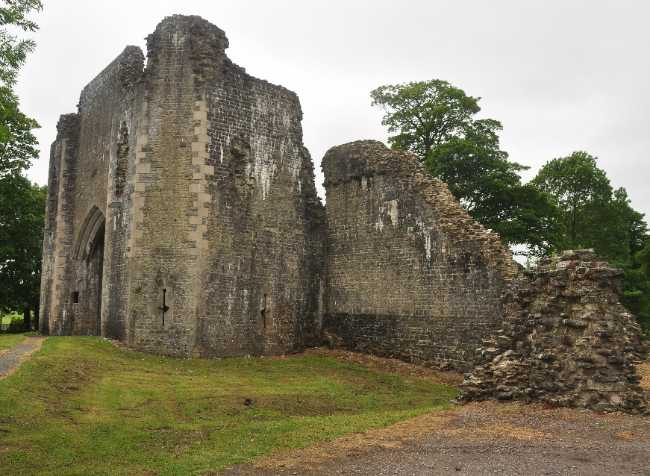
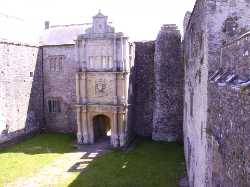
St Quentin’s Castle, also known as Llanblethian Castle, is a fascinating 14th-century fortified stronghold originally built by the de Clare family and later enhanced by the St Quentin family. Though now standing as a ruin, this historic site once served as an important defensive manor within the Lordship of Glamorgan. The castle is located at 7 Castle Hill, Llanblethian, Cowbridge, CF71 7BE, Wales, United Kingdom. It stands nestled in the charming village of Llanblethian, just a short walk from the historic market town of Cowbridge. Because of its convenient location in the rural Vale of Glamorgan, visiting St Quentin’s Castle places you within easy reach of several notable historic landmarks and attractions. A short stroll leads into the heart of Cowbridge, where you can explore boutique shops, local eateries, and the historic town walls. Heading slightly further afield brings you to the multi-level Renaissance ruins of Old Beaupre Castle near the River Thaw, while traveling south toward the coast opens up access to the stunning cliffs of the Heritage Coast and historic sites like St Donat's Castle.
 Castle
 Museum