Burg Lauenstein
Perched on a wooded hill above the village of Lauenstein in Upper Franconia, Lauenstein Castle is one of Bavaria’s most atmospheric medieval fortresses. First documented in 1138, the castle occupies a strategic position near the historic northern frontier of Franconia and is considered the northernmost castle in Bavaria. Its commanding location made it an important stronghold for centuries and a key site in regional power struggles. The oldest surviving parts of the castle date back to the 12th century, but its appearance changed dramatically during the Renaissance. Between 1551 and 1554, the Lords of Thyna transformed the fortress into a modern Renaissance residence, adding the striking corner towers that still define the castle’s silhouette today. This blend of medieval defenses and Renaissance architecture gives Lauenstein a distinctive character unlike many other Bavarian castles. Inside, visitors can explore museum rooms filled with historical artifacts collected by Dr. Erhard Messmer, who rescued and restored the neglected castle in the late 19th century. The collections include armor, weapons, traditional Franconian furnishings, musical instruments, lamps, and an interesting display of historic locks and keys. The restored interiors reflect the romantic historicist style that was popular during Messmer’s restoration
Ludwigsstadt Germany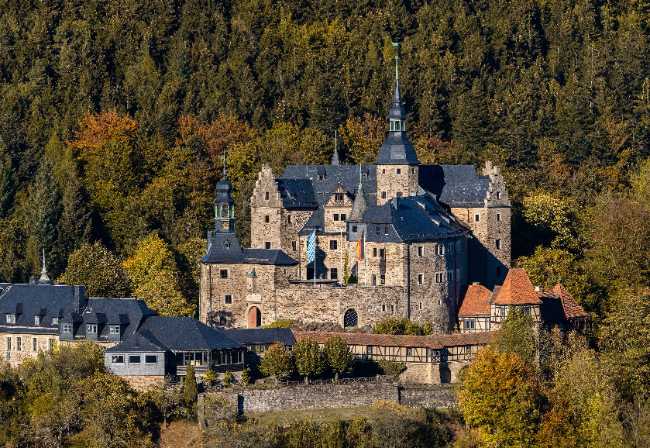
Burg Lauenstein rises on a wooded hill above the small village of Lauenstein, which belongs to the town of Ludwigsstadt in northern Franconia, Bavaria. The address is Burgstraße 3, 96337 Ludwigsstadt.This is one of Bavaria’s northernmost castles, with roots going back to the 12th century and a striking Renaissance main wing known as the Thünabau. Inside, a museum fills more than twenty rooms with historic furniture, armour, weapons, paintings and special collections that give a clear sense of castle life through the centuries.The surrounding Frankenwald landscape offers quiet walks and forest views, and the nearby town of Ludwigsstadt is a short distance away. Kronach, with its own historic fortress, lies further south and makes a natural further stop in the region.