Höchstädt Castle
Höchstädt Castle is one of the finest examples of Late Renaissance architecture in Bavaria. Located in the town of Höchstädt an der Donau, the elegant palace was built between 1589 and 1603 for Count Palatine Philipp Ludwig of Pfalz-Neuburg as a future residence for his wife, Duchess Anna of Jülich-Cleves-Berg. With its four round corner towers, impressive courtyards, and distinctive central tower, the castle remains one of the most valuable Renaissance buildings in southern Germany. One of the most fascinating aspects of the castle is its connection to Duchess Anna. After becoming a widow, she lived here from 1615 to 1632 and remained faithful to Protestantism at a time of great religious change. This history is still reflected in the beautifully decorated palace chapel, whose remarkable ceiling paintings by Mang Kilian are considered important examples of southern German Protestant art before the Counter-Reformation. A major highlight is the Museum of German Faience, which presents the history of this elegant ceramic art form from the 17th and 18th centuries. The museum displays around 1,000 objects from numerous German faience manufactories, making it one of the most important collections of its kind.
Höchstädt an der Donau Germany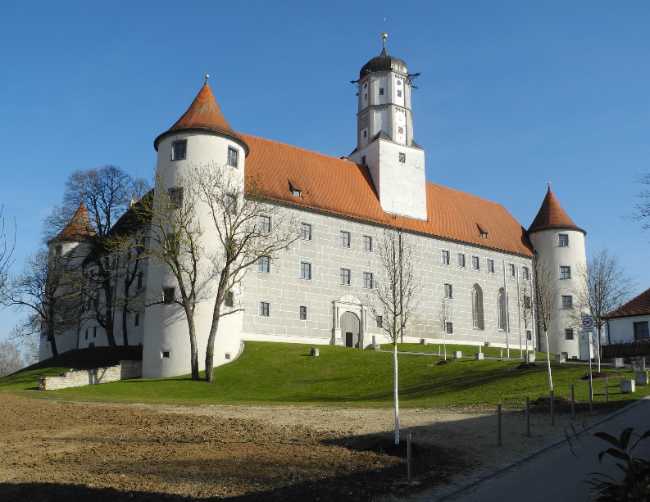
Höchstädt Castle stands at the eastern edge of the town of Höchstädt an der Donau in Bavarian Swabia. The address is Herzogin-Anna-Straße 52, 89420 Höchstädt an der Donau.This late-Renaissance four-wing palace was built around 1600 as a residence for the Palatinate-Neuburg family and still keeps much of its original character, including a finely painted chapel. Inside you will find a permanent exhibition on the famous Battle of Höchstädt of 1704 and a collection of German faience pottery, along with changing displays.The historic town centre with its market square and local history museum lies just a short walk away. The surrounding Danube valley offers quiet riverside paths, and the nearby town of Dillingen is an easy further stop for anyone exploring the region.