Branitz Palace
Located on the edge of Cottbus, Branitz Palace is far more than a historic residence. It is the centerpiece of the extraordinary world created by Prince Hermann von Pückler-Muskau, one of Europe’s most celebrated landscape designers, travel writers, and visionaries. The Baroque palace dates from the 1770s, but it gained its unique character in the 19th century when Pückler transformed it into his personal home and surrounded it with a spectacular landscaped park. Unlike many royal palaces, Branitz reflects the personality of a single remarkable individual. After financial difficulties forced Pückler to leave his famous estate at Muskau, he settled in Branitz in 1845 and devoted himself to creating what he considered his masterpiece. Inside the palace, visitors can explore the prince’s original living quarters, which have been carefully restored to their 19th-century appearance. Highlights include the elegant Green Hall, richly furnished salons, the historic library, and rooms displaying personal belongings that reveal Pückler’s unusual lifestyle and wide-ranging interests.
Cottbus Germany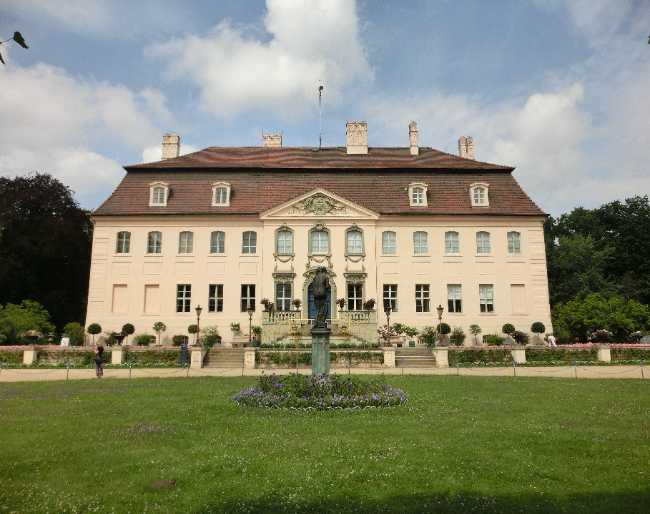
Branitz Palace sits on the southeastern edge of Cottbus in Brandenburg, tucked inside the wide landscape of Branitz Park. The address is Robinienweg 5, 03042 Cottbus.The palace is a late-Baroque house that Prince Hermann von Pückler-Muskau turned into his home and personal showcase in the mid-nineteenth century. Inside you can walk through the restored rooms that still hold his furniture, books and the famous Oriental chambers, along with a fine collection of paintings by the local artist Carl Blechen. Right beside the palace stand the old stables, now used for changing exhibitions, and a visitor centre in the former estate buildings that explains the prince’s life and work.The real star around the palace is the park itself, an English-style landscape garden complete with lakes, gentle hills and two distinctive earth pyramids, one of which holds Pückler’s tomb. Everything is close enough that you can move easily between the palace, the park and the small museum spaces without needing to travel far. It makes a gentle, self-contained outing focused on one of Brandenburg’s most personal and imaginative palace-and-garden ensembles.
 Museum
 Museum
 Museum