Burg Beeskow
Standing proudly in the historic town of Beeskow, Burg Beeskow is one of Brandenburg’s best-preserved medieval water castles. Its origins date back to the 13th century, and the fortress was first documented in 1316. Surrounded by defensive waterways, it formed part of a network of strongholds that protected the region during the Middle Ages. Over the centuries, the castle served as a noble residence, a bishop’s seat, and later an administrative center of the Brandenburg rulers. Today, Burg Beeskow has been transformed into a vibrant cultural and educational center while retaining its historic character. The castle complex combines buildings dating from roughly 1250 to 1550, allowing visitors to experience several centuries of architectural development in a single location. One of the most impressive features is the 30-meter-high keep (Bergfried). Visitors who climb to the viewing platform are rewarded with magnificent views over the old town of Beeskow and the surrounding Oder-Spree landscape. Inside the castle, the Museum Oder-Spree explores the history, culture, and environment of the region through engaging exhibitions. History enthusiasts can also discover displays dedicated to medieval life and local traditions.
Beeskow Germany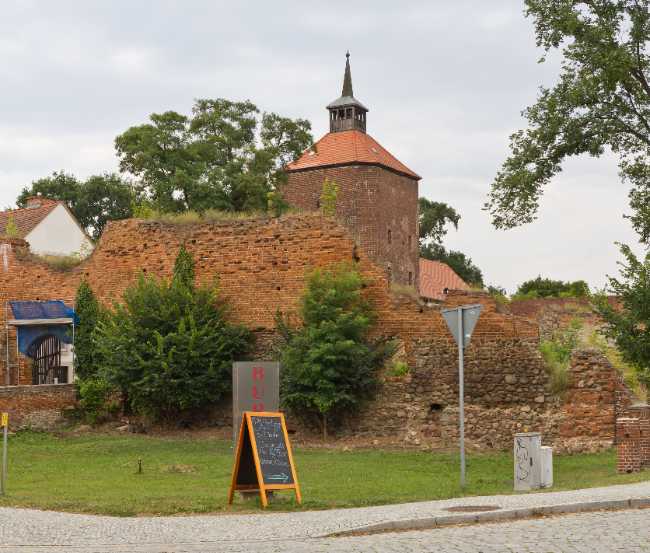
Burg Beeskow sits in the heart of the small town of Beeskow in Brandenburg, right beside the river Spree. The address is Frankfurter Straße 23, 15848 Beeskow.This is a well-preserved medieval water castle that once formed part of a network of fortresses in the region. Today the complex houses several cultural spaces under one roof. You can visit the museum oder-spree, which covers local history, the music museum with its collection of mechanical instruments, and changing art exhibitions that include works from the GDR period. The tall keep offers a viewing platform with open views across the town and the surrounding Spree landscape.A short distance away lie the related Strele castles of Storkow and Friedland, both easy to reach and similar in character. The old town of Beeskow itself, with its remaining town walls and quiet streets, sits right next to the castle, so everything feels connected and easy to explore on foot. It makes a straightforward, low-key outing focused on one of the region’s most complete historic fortress ensembles.