Freilandmuseum Lehde
Nestled in the heart of the Spreewald biosphere reserve, Freilandmuseum Lehde offers visitors a fascinating journey into the traditional rural life of the Sorbs/Wends and German settlers who lived in this unique waterland region. Unlike a conventional museum, this open-air museum consists of original historic farmhouses, barns, and workshops spread across a picturesque island village that can be reached by waterways and footpaths. One of the most interesting facts about Freilandmuseum Lehde is that many of its buildings were preserved in their original location. The museum provides an authentic glimpse into daily life in the Spreewald from the 19th and early 20th centuries. Visitors can learn how families adapted to a landscape crisscrossed by canals, where boats often served as the primary means of transportation. Inside the traditional cottages, beautifully furnished living rooms, kitchens, and bedrooms showcase historic furniture, household items, and regional craftsmanship. Exhibitions explain local customs, agriculture, fishing traditions, and the unique culture of the Sorbian/Wendish minority that has shaped the region for centuries. Particularly worth seeing are the exhibits on traditional Spreewald clothing, including colorful festive costumes worn for weddings and religious celebrations.
Lehde Germany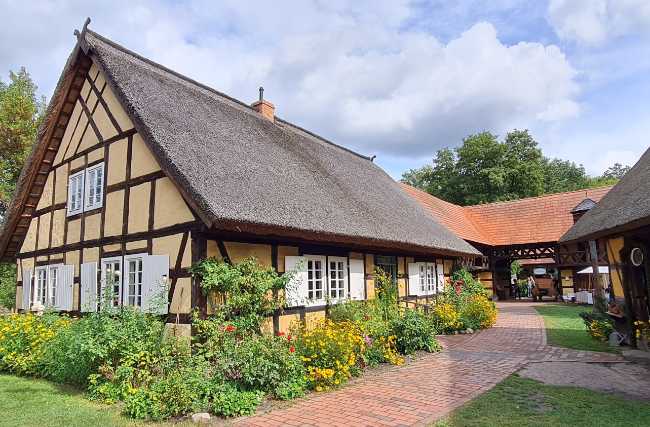
Freilandmuseum Lehde sits right in the heart of the little Spreewald village of Lehde, which belongs to the town of Lübbenau in Brandenburg. You’ll find it at An der Giglitza 1a, 03222 Lübbenau OT Lehde.The museum itself is a quiet cluster of old farmhouses that show how people lived and worked in this watery landscape a century or two ago. Because Lehde is tucked among the canals, the nicest way to arrive is often by traditional punt boat from Lübbenau’s harbour, though a pleasant two-kilometre walk through the trees works just as well.Just a few steps away in the same village is the small Gurkenmuseum, which tells the story of the famous Spreewald gherkins. A short distance into Lübbenau proper you’ll reach the Spreewald-Museum, a regional history museum set up like an old town with shops and workshops. The town itself has a charming centre with a church and a few places to sit by the water. A little further afield, Schloss Lübben offers a proper castle-and-museum experience if you fancy something more grand.The real draw all around is the Spreewald itself – the network of quiet waterways, the thatched houses, and the easy boat trips that let you drift past gardens and forests. It’s a gentle, unhurried corner of Brandenburg that feels a world away from the big cities.