Ludwigslust Palace
Called the Versailles of the North, Ludwigslust was the ducal residence of Mecklenburg-Schwerin from 1765 to 1837. Built 1772 to 1776 for Duke Friedrich II, it blends late Baroque and Neoclassicism in an elegant E-shaped palace with a sandstone facade. Inside, the star is the two-storey Golden Hall, with monumental Corinthian columns, large mirrors, crystal chandeliers and gold and light-grey decoration. The surprise: much of the splendour is papier-mâché. To save money, the duke’s footman suggested a local carton workshop, which produced capitals, mouldings, statues and even the Golden Hall’s decoration. Explore the grand reception rooms on the piano nobile, the restored picture gallery with court paintings, hunting scenes, antique clocks, busts by Jean-Antoine Houdon, and silver and art chambers. Parquet floors, fireplaces and mirrors show courtly life. Outside, the Baroque park and the palace church, with its huge papier-mâché altar painting, complete the ensemble.
Ludwigslust Germany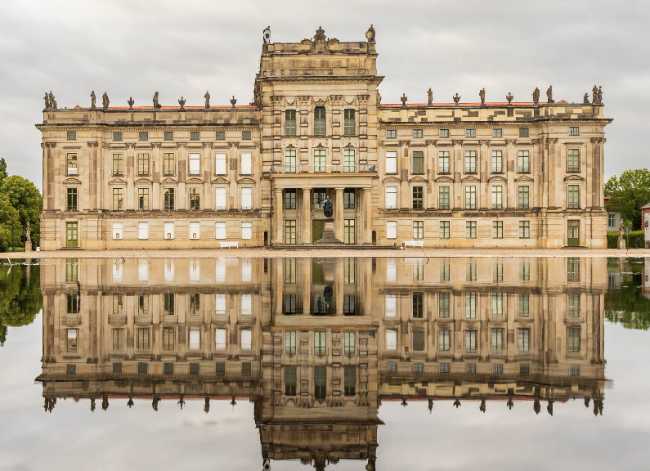
Ludwigslust Palace, known locally as Schloss Ludwigslust, is often called the Versailles of the North. Location: Schlossfreiheit 1, 19288 Ludwigslust, Mecklenburg-Western Pomerania, Germany. It sits in the heart of Ludwigslust, roughly thirty-five kilometers south of Schwerin. Because of its central setting, visiting Ludwigslust Palace places you steps away from historic architecture and regional attractions. Surrounding the building is the expansive 120-hectare Schlosspark, featuring romantic canals, cascading fountains, and the neoclassical Court Church (Stadtkirche). A short drive northeast leads to the medieval Neustadt-Glewe Castle (Burg Neustadt-Glewe) and its local museum. Further north lies the state capital of Schwerin, home to the fairy-tale Schwerin Castle (Schloss Schwerin) and the State Museum Schwerin.