Güstrow Castle
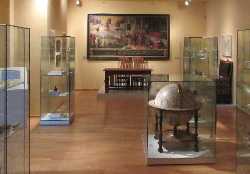
Güstrow Castle is one of northern Germany’s finest Renaissance palaces. Built from 1558 for Duke Ulrich of Mecklenburg, it was designed for representation as much as residence, with Italian-inspired architecture rare this far north. Inside, look up. The grand banquet hall has a unique stucco ceiling from 1620 by Daniel Anckermann, with hunting scenes adapted from Dutch engravings. Another highlight is the ancestral and deer frieze by Christoph Parr from the 1570s, tracing the ducal line alongside deer and hunting imagery. The palace is now a museum and cultural centre. Explore vaulted medieval rooms in the basement, Flemish paintings, the art chamber with hunting and ceremonial weapons, Renaissance art, medieval collections, ancient and contemporary glass, pottery, and GDR paintings. One exhibition covers the short, dramatic reign of Wallenstein in Güstrow. Concerts and art shows keep the castle alive, and the chapel impresses with preserved original features.
Güstrow Germany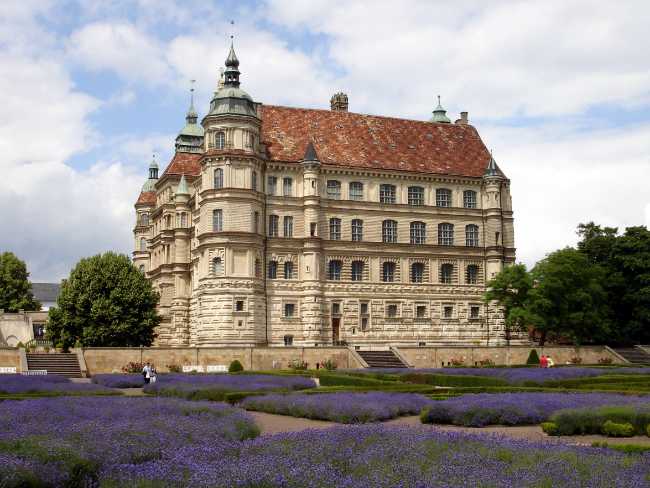
Güstrow Castle, known locally as Schloss Güstrow, is considered one of the finest Renaissance palaces in Northern Europe. Location: Franz-Parr-Platz 1, 18273 Güstrow, Mecklenburg-Western Pomerania, Germany. It sits on the southern edge of Güstrow's historic old town, roughly forty kilometers south of Rostock. Because of its setting in the heart of Mecklenburg, visiting Güstrow Castle places you steps away from celebrated cultural landmarks. Just across the street stands the Ernst Barlach Studio House (Atelierhaus am Heidberg), alongside the Gertrude Chapel housing the expressionist sculptor's famous works. A short walk into town leads to the Gothic Güstrow Cathedral and the Municipal Museum (Stadtmuseum Güstrow). Further afield, a scenic drive north brings you to the Hanseatic city of Rostock, while heading west leads to the fairy-tale Schwerin Castle (Schloss Schwerin).
 Museum