Hohenzieritz Palace
Nestled in the peaceful countryside of Mecklenburg-Western Pomerania, Hohenzieritz Palace is a charming historic residence best known as the place where Queen Luise of Prussia died in 1810. Originally built between 1747 and 1751, the palace later became the summer residence of Duke Carl II of Mecklenburg-Strelitz, father of the famous queen. Today, it combines royal history, elegant architecture, and beautiful landscaped gardens, making it one of the region’s most fascinating cultural landmarks. The highlight of any visit is the Queen Luise Memorial. Located within the palace, it centers on the restored room where the beloved queen spent her final days. Exhibits include portraits, historic furnishings, busts, personal memorabilia, and objects connected to her life and legacy. The memorial offers an intimate glimpse into one of Germany’s most admired royal figures and explains how her early death transformed her into a national symbol. Visitors can also admire several reconstructed palace rooms featuring early Neoclassical decoration. These interiors reflect the tastes of the late 18th and early 19th centuries, with elegant wall coverings, period furniture, and artworks that illustrate aristocratic life in Mecklenburg-Strelitz.
Hohenzieritz Germany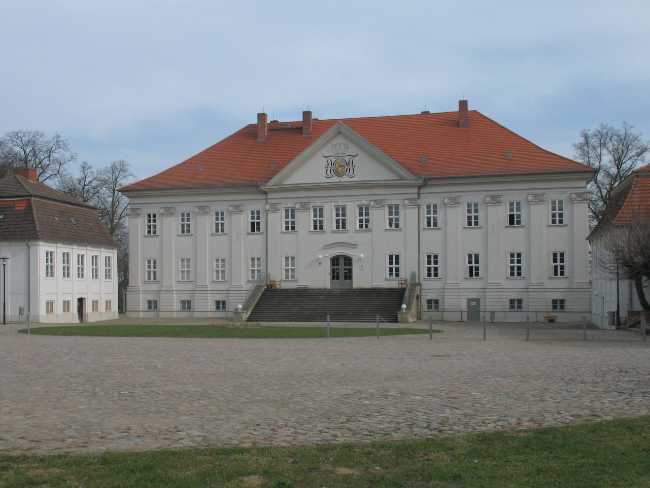
Hohenzieritz Palace, known locally as Schloss Hohenzieritz, is an elegant Neoclassical country estate steeped in Prussian royal history. Location: Schlossplatz 3, 17237 Hohenzieritz, Mecklenburg-Western Pomerania, Germany. It sits in the quiet rural municipality of Hohenzieritz, nestled between Neustrelitz and Neubrandenburg in the Mecklenburg Lake District. Because of its tranquil setting in the lake district, visiting Hohenzieritz Palace places you close to notable historic towns, medieval fortresses, and regional museums. A short drive south brings you to Neustrelitz, home to the scenic Schlossgarten palace park, the Orangery, and the Cultural Quarter museum. Heading north leads to the medieval Penzlin Castle (Alte Burg Penzlin) with its famous witch museum, as well as the historic fortified city of Neubrandenburg and its Regional Museum.