Dargun Palace
Dargun Palace is one of the most unusual historic sites in Mecklenburg-Western Pomerania because it combines the remains of a medieval monastery with a Renaissance ducal residence. Located in the town of Dargun, the complex began as a Cistercian abbey founded in 1172. After the Reformation, the former monastery was gradually transformed into a palace for the rulers of Mecklenburg-Güstrow, creating a remarkable blend of religious and secular architecture. One of the most fascinating facts about Dargun Palace is that it was originally built on top of monastery structures. The Renaissance palace incorporated parts of the medieval cloister, and for centuries it served as a residence of the Mecklenburg dukes. Sadly, much of the complex was destroyed by fire in 1945, leaving behind atmospheric ruins that remain one of the region’s most striking historical landmarks. Today, visitors can explore the restored entrance area, impressive courtyard, surviving palace walls, and the monumental ruins of St. Mary’s Abbey Church. The soaring Gothic brick architecture of the church provides a powerful impression of the former wealth and importance of the monastery. During the summer months, the courtyard and church ruins host concerts, exhibitions, and cultural festivals, giving the historic site a vibrant atmosphere.
Dargun Germany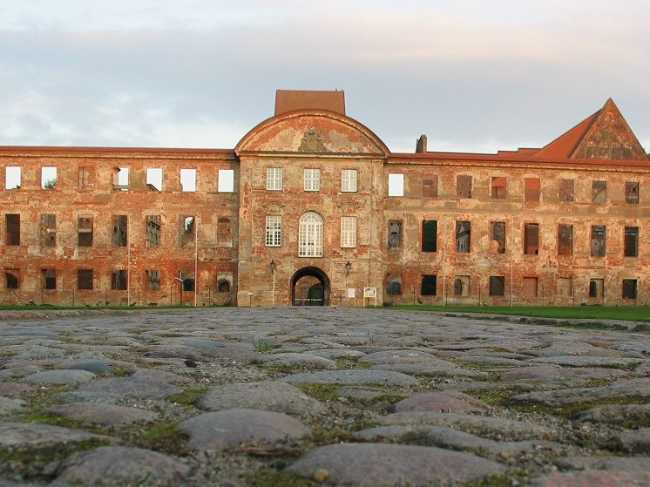
Dargun Palace, known locally as Schloss Dargun, is an atmospheric historic complex blending medieval monastic heritage with Renaissance and Baroque grandeur. Location: Schloss 6, 17159 Dargun, Mecklenburg-Western Pomerania, Germany. It sits in the town of Dargun in the Mecklenburg Lake District, nestled between Demmin and Gnoien. Because of its scenic position near the Peene Valley and Mecklenburg Switzerland, visiting Dargun Palace places you close to notable castles and regional museums. A short drive southeast leads to the imposing Baroque Kummerow Castle (Schloss Kummerow), famous for its contemporary photography collection, as well as the historic Verchen Monastery on Lake Kummerow. Heading east brings you to the Hanseatic town of Demmin with its Kreisheimatmuseum and the medieval Haus Demmin ruins, while a trip southwest leads to Basedow Castle (Schloss Basedow).