Dömitz Fortress
Standing proudly on the banks of the Elbe River, Dömitz Fortress is one of the finest examples of Renaissance military architecture in Northern Europe. Built between 1559 and 1565 on the orders of Duke Johann Albrecht I of Mecklenburg, the fortress was designed to protect an important river crossing and safeguard Mecklenburg’s southwestern border. Today, it remains one of the best-preserved flatland fortresses of the 16th century and a highlight of Mecklenburg-Western Pomerania. The fortress is instantly recognizable by its unusual pentagonal design, with five powerful bastions connected by massive defensive walls. It is the only fully preserved Renaissance fortification of its kind in northern Germany. Designed by the Italian military engineer Francesco a Bornau, the complex demonstrates the latest military engineering ideas of the Renaissance period. Visitors entering through the impressive sandstone gate can explore a fascinating museum dedicated to the history of the fortress and the town of Dömitz. Exhibits explain the fortress’s military role during the Thirty Years’ War and Napoleonic Wars, as well as its later use as a prison. One particularly interesting chapter concerns the famous Low German writer Fritz Reuter, who was imprisoned here in 1839–1840 and later wrote about his experiences.
Dömitz Germany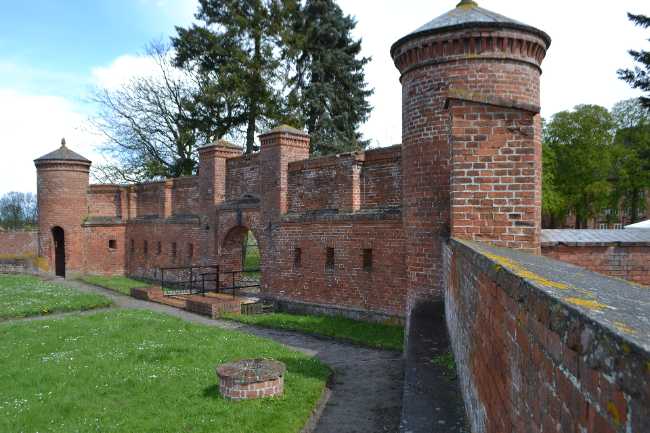
Dömitz Fortress, known locally as Festung Dömitz, is one of the best-preserved sixteenth-century Renaissance lowland fortresses in Northern Europe. Location: Auf der Festung 3, 19303 Dömitz, Mecklenburg-Western Pomerania, Germany. It sits in the southwestern corner of the state at the confluence of the Elbe and Elde rivers, right near the border with Lower Saxony. Because of its riverside location in the Elbe Valley, visiting Dömitz Fortress places you close to intriguing Cold War memorials, medieval castles, and grand ducal palaces. Just west of town stand the dramatic ruins of the historic Dömitz Railway Bridge, destroyed during World War II, alongside the Elbe Valley Biosphere Reserve visitor center. A short drive across the river into Lower Saxony leads to the historic town of Dannenberg and the Rundling Museum in Lübeln, while heading northeast brings you to the Baroque Ludwigslust Palace (Schloss Ludwigslust) and medieval Neustadt-Glewe Castle.