Broock Castle
Nestled in the scenic Tollense Valley of Mecklenburg-Western Pomerania, Broock Castle is one of the region’s most ambitious restoration projects and a remarkable example of aristocratic architecture. First mentioned in historical records in 1331, the estate evolved from a medieval fortified site into a grand late-Baroque manor house built between 1770 and 1777 for Major General Christian Bogislaw von Linden. One of the castle’s most fascinating features is its transformation during the 19th century. Between 1841 and 1843, the renowned Prussian architect Friedrich August Stüler, who also worked on several royal projects, redesigned the manor in a striking Neo-Gothic “castle style.” At the same time, celebrated landscape architect Peter Joseph Lenné created plans for an English landscape park, turning Broock into one of the most prestigious noble estates in Western Pomerania. For generations, Broock was famous as the social center of the region. Elegant balls, hunting parties, and gatherings of the local nobility were held here, while the estate became home to the largest private stud farm in Western Pomerania.
Alt Tellin Germany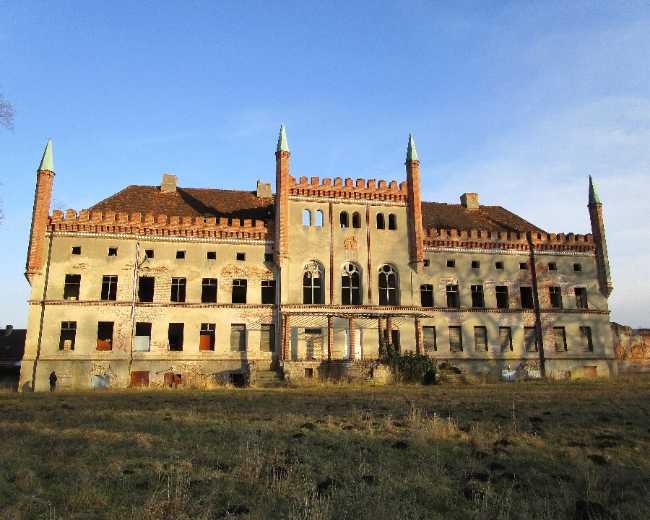
Broock Castle, known locally as Schloss Broock, is a striking neo-Gothic manor house overlooking the scenic Tollense Valley in Western Pomerania. Location: Broock 12, 17129 Alt Tellin, Mecklenburg-Western Pomerania, Germany. It sits tucked away in the quiet rural hamlet of Broock along the Tollense River, roughly twenty kilometers south of the Hanseatic town of Demmin. Because of its tranquil setting between the Tollense and Peene valleys, visiting Broock Castle places you close to fascinating castles, museums, and historic towns. A short drive north leads to Demmin, home to the Kreisheimatmuseum and the medieval Haus Demmin ruins, as well as the Renaissance Quilow Moated Castle (Wasserschloss Quilow) to the northeast. Heading west brings you to the imposing Kummerow Castle (Schloss Kummerow) with its contemporary photography collection, while a trip south leads to the medieval town gates and Regional Museum of Neubrandenburg.