National Trust - Castle Drogo
Castle Drogo, perched high above the Teign Gorge on Dartmoor, is one of the most intriguing country houses in England—famously known as the last castle ever built in Britain. Designed by Sir Edwin Lutyens for the wealthy Julius Drewe and completed in 1930, it blends medieval‑style battlements with modern comforts, creating a unique fusion of romantic fantasy and early 20th‑century innovation. Despite its fortress‑like appearance, the castle was intended as a family home, complete with electricity, telephones and cleverly concealed domestic spaces. Inside, visitors can explore the dramatic Entrance Hall, the refined Drawing Room and Drewe’s austere Library, all furnished with pieces chosen to evoke a noble lineage. The Nursery and family bedrooms reveal a more intimate side of the house, while interpretive displays explain the long‑running battle against water ingress that led to one of the National Trust’s largest conservation projects. The gardens, also designed by Lutyens and inspired by Gertrude Jekyll, are a highlight. Formal terraces, a croquet lawn and the charming Rhododendron Garden contrast beautifully with the wild expanse of Dartmoor beyond. Walking trails lead down into the Teign Gorge, offering sweeping views and a sense of the dramatic landscape that shaped Drewe’s vision.
Drewsteignton United Kingdom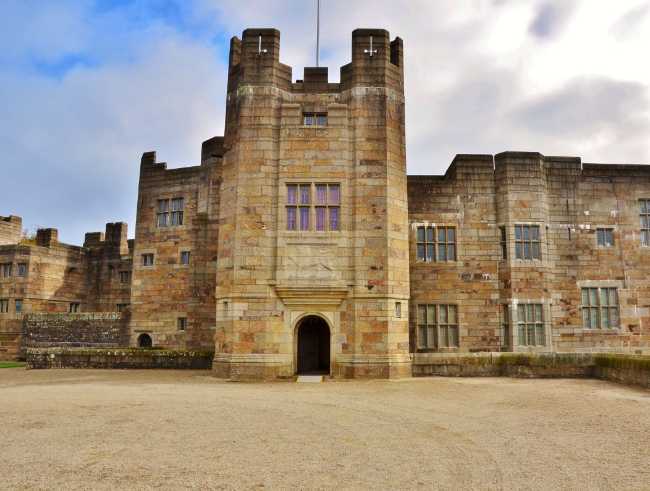
Castle Drogo is a remarkable granite fortress dramatically set above the Teign Gorge on the edge of Dartmoor National Park in southwest England. It stands as the last castle ever built in the country, constructed in the early twentieth century by renowned architect Sir Edwin Lutyens. The official address is Drewsteignton, Exeter, Devon, EX6 6PB, United Kingdom. Managed by the National Trust, the site blends medieval grandeur with modern early-1900s living, featuring dramatic terraced gardens, extensive woodland trails, and sweeping views across the surrounding countryside. Visitors exploring this part of Devon will find several other notable attractions nearby. Just a short drive south is Canonteign Falls, home to one of the highest waterfalls in England, complete with tranquil lakes and scenic valley walks. History lovers can head west toward Okehampton Castle, the haunting, sprawling ruins of a medieval motte-and-bailey fortress perched on a wooded spur. A bit further east sits Powderham Castle, a magnificent historic estate located on the banks of the River Exe that offers guided tours through centuries of family history. Museum fans can make their way into Exeter to visit the Royal Albert Memorial Museum, which houses impressive collections ranging from fine art and local archaeology to world cultures and natural history.