Etruria Industrial Museum
Etruria Industrial Museum in Stoke‑on‑Trent is a rare surviving example of a working steam‑powered bone and flint mill, offering one of Staffordshire’s most vivid windows into the industrial processes that shaped the Potteries. Founded by Jesse Shirley in 1857, the site became essential to local ceramics production, grinding materials that were mixed into clay to improve strength, whiteness and durability. Its location beside the Trent and Mersey Canal reflects the region’s deep connection to waterborne trade and transport. Inside, the star attraction is the 1903 boiler and steam engine, a beautifully restored piece of engineering that still powers the mill on steaming days. Watching the great flywheel turn and feeling the building tremble gives a powerful sense of Victorian industry in motion. The Pan Room, where ground materials were mixed, and the Crusher Room, with its heavy machinery, reveal the demanding work once carried out here. Exhibits explain how bone and flint were processed, why these materials were vital to pottery, and how the mill supported nearby factories, including Josiah Wedgwood’s works. The museum also explores the lives of the workers and the evolution of industrial technology in the Potteries.
Stoke-on-Trent United Kingdom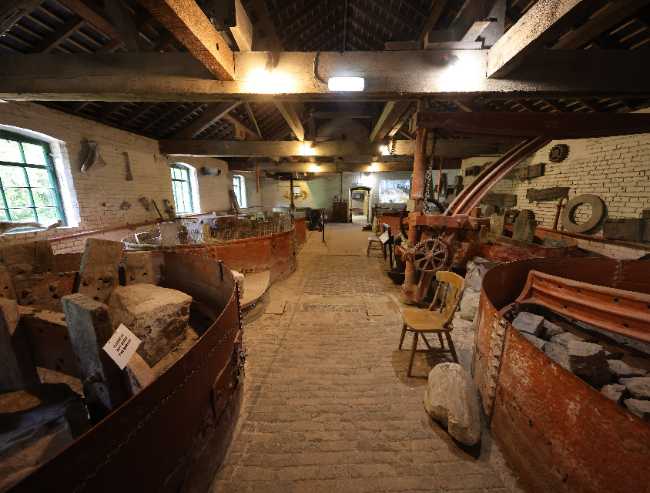
The Etruria Industrial Museum is located in the suburb of Etruria in Stoke-on-Trent, Staffordshire. You can find this atmospheric Victorian grinding mill on Lower Bedford Street, off Etruria Vale Road, with the postcode ST4 7AF. Situated at the junction of the Trent and Mersey Canal and the Caldon Canal, the museum sits in a historic waterside setting surrounded by original canal locks and brick heritage buildings. The surrounding area offers plenty of iconic pottery landmarks, cultural sites, and green spaces to explore. Just a short walk east into Hanley city center brings you to The Potteries Museum & Art Gallery, where you can admire world-class ceramics, fine art, and the famous Staffordshire Hoard. Near the city center, you can also tour working pottery heritage sites like the Emma Bridgewater Factory alongside the canal or visit the Dudson Museum, housed inside a preserved historic bottle oven.Heading slightly north leads to Middleport Pottery, a nineteenth-century working site offering factory tours, craft shops, and tearooms. For a look at grander local heritage, head south toward Barlaston to explore World of Wedgwood, or visit the nearby Trentham Estate to wander through expansive Italianate gardens, shop at the lakeside village, or visit the monkey forest. The local canal paths surrounding the museum also provide peaceful walking routes toward neighboring cafes, parks, and traditional pubs.
 Museum
 Museum