Sutton Hoo
Sutton Hoo is one of Britain’s most important archaeological sites, a quiet Suffolk hillside that revealed a spectacular Anglo‑Saxon royal burial in 1939. The discovery of a 27‑metre ship filled with treasures transformed understanding of early medieval England, proving it was a sophisticated, artistic and well‑connected culture rather than a “dark age”. Inside the modern exhibition hall, visitors can see stunning artefacts from the burial: the iconic helmet with its fierce face‑mask design, intricate gold buckles, garnet‑inlaid jewellery and ceremonial weapons. These objects, displayed alongside detailed reconstructions, show the craftsmanship and symbolism of a royal court around the early 7th century. The full‑scale reconstruction of the burial chamber is a highlight, offering a vivid sense of how the ship was packed with prestige items for the afterlife. The High Hall explores the world of the East Anglian kings, including the likely burial of King Rædwald, and explains the excavation led by Basil Brown, whose careful work uncovered one of Europe’s greatest archaeological finds. Outside, visitors can walk among the burial mounds, where subtle contours in the landscape hint at the grandeur once hidden beneath the soil.
Woodbridge United Kingdom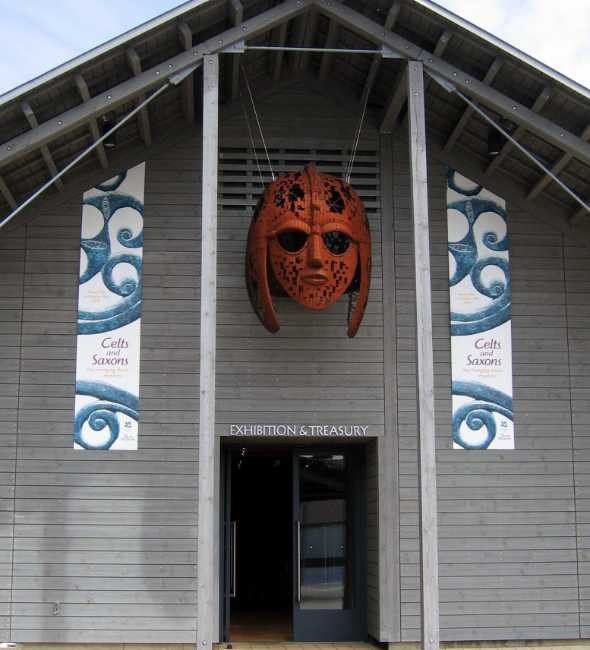
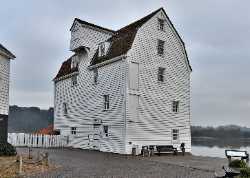
Sutton Hoo is a famous Anglo-Saxon royal burial site situated on a grassy bluff overlooking the River Deben in Suffolk. Its official address is Tranmer House, Woodbridge, Suffolk, IP12 3DJ. The estate is renowned worldwide as the location of the 1939 discovery of an Anglo-Saxon ship burial, filled with extraordinary treasures and ancient artifacts. Its position just across the river from Woodbridge makes it easy to combine your visit with other historic sites nearby. Just two miles down the road in Woodbridge, you can visit the Woodbridge Tide Mill Museum, one of the oldest working tide mills in the UK, where you can learn about traditional grain milling along the riverbank. History enthusiasts can also pop into the Woodbridge Museum on the waterfront to discover more about local maritime heritage. A short fifteen-minute drive north brings you to Framlingham Castle, a grand 12th-century fortress surrounded by parkland, famous for its towering wall walk. If you travel slightly south towards Felixstowe, you can explore Landguard Fort, an impressive coastal artillery fortification guarding the harbour, right next to the Felixstowe Museum. Nature lovers can head east toward the Suffolk Coast, where Orford Castle sits perched above the marshes, or venture to Snape Maltings, a vibrant cultural complex featuring art galleries, independent shops, and a famous concert hall set along the River Alde.
 Museum