Coughton Court
Coughton Court in Warwickshire is a striking Tudor house woven deeply into the story of England’s religious conflicts. Home to the Throckmorton family for over six centuries, it is most famous for its connection to the Gunpowder Plot of 1605. Several conspirators were related to the family, and a messenger carrying news of the plot’s failure is said to have arrived at Coughton, making the house a silent witness to one of history’s most dramatic moments. Inside, the house offers richly layered interiors. The Great Hall, with its timber framing and ancestral portraits, sets a powerful tone. The Drawing Room and Long Gallery reveal centuries of Catholic devotion, with hidden symbols, embroidered vestments, and personal relics that survived periods of persecution. The Tower, accessible to visitors, provides sweeping views across the Warwickshire countryside and hints at the defensive needs of earlier generations. One of the most compelling spaces is the Catholic chapel, still in use today, which reflects the Throckmortons’ steadfast faith. The adjacent Blue Drawing Room and family bedrooms add warmth, showing the domestic side of a family that lived through turbulent times.
Coughton United Kingdom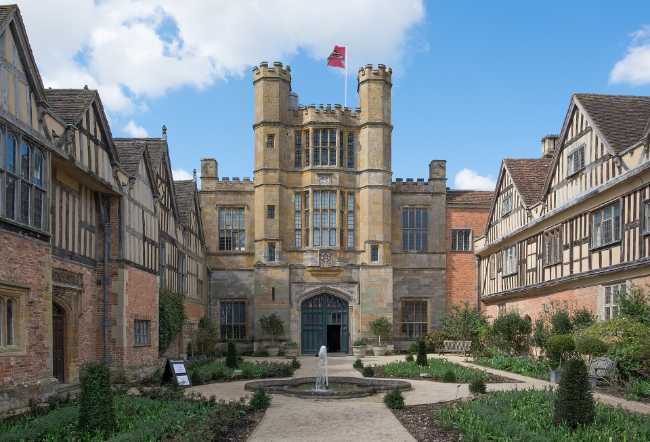
Coughton Court is a Tudor country house on the A435 between Studley and Alcester in Warwickshire, postcode B49 5JA. It sits in open countryside a short distance from Alcester, with the main entrance right off the main road. Nearby you can visit Ragley Hall, another grand house with parkland, or head towards Stratford-upon-Avon for Shakespeare’s Birthplace and related historic houses. Closer National Trust properties include Packwood House with its famous yew garden and the moated Baddesley Clinton. Kenilworth Castle is also within easy reach for more substantial ruins and an Elizabethan garden. The surrounding lanes and the River Arrow offer pleasant walks that link these historic houses and castles into a relaxed day exploring Warwickshire’s Tudor and medieval heritage.