Lacock Abbey
Lacock Abbey in Wiltshire is one of England’s most atmospheric historic sites, blending monastic tranquillity with centuries of country‑house life. Founded in the early 13th century as an Augustinian nunnery, it later became a family home after the Dissolution. A remarkable fact is that Lacock is the birthplace of photography: William Henry Fox Talbot created the world’s earliest surviving photographic negative here in 1835, taken from a window in the abbey. Inside, visitors can explore the medieval cloisters, whose vaulted walkways have appeared in numerous film and television productions. The chapter house, sacristy and warming room retain their original stonework, offering a vivid sense of monastic life. The transition to a Tudor and Georgian residence is visible in the Great Hall, dining room and drawing room, furnished with portraits, books and personal objects from the Talbot family. The Fox Talbot Museum, located in the village, complements the abbey visit with displays on early photography, scientific experimentation and Talbot’s pioneering work. The surrounding grounds add to the experience, with lawns, riverside paths and seasonal gardens framing the abbey’s honey‑coloured stone.
Lacock United Kingdom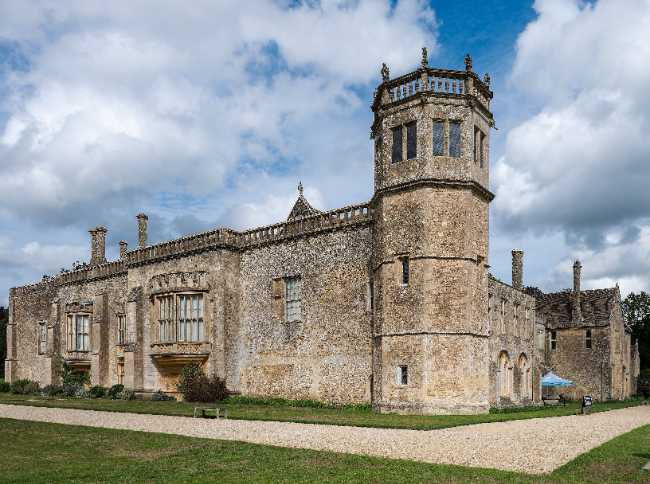
You will find it at Lacock Abbey, High Street, Lacock, near Chippenham, Wiltshire SN15 2LG. It is just off the A350 between Chippenham and Melksham, in the village of Lacock itself. The abbey started as a nunnery back in 1232 and later became a country house, and it was also the home of William Henry Fox Talbot who invented the photographic negative. The Fox Talbot Museum is right there on the site too. Because the whole village is owned by the National Trust, there is so much to see without even moving the car. Lacock village is famous for its timber framed cottages, old inns and little shops, and you will probably recognise it from films like Harry Potter and Pride and Prejudice. You can just wander the streets, pop into the bakery and have tea in the courtyard. Nearby you have lots of lovely places. Bowood House and Gardens is only a few miles away, a big Georgian palace with Capability Brown parkland and gardens. Castle Combe, often called the prettiest village in England, is close by, and Corsham Court with its art collection and peacocks is just down the road. The market town of Chippenham is near, and Bradford on Avon with its little bridge and tithe barn is lovely. For bigger history, Avebury stone circle and manor, Bath with its Roman Baths and abbey, and Stonehenge are all within easy driving distance.