St Vigeans Stones Museum
St Vigeans Stones Museum is one of Scotland’s most important early medieval sites, home to a remarkable collection of carved Pictish stones. These sculptures once stood around the nearby St Vigeans church, forming a monumental display that reflected the power and artistry of the early Christian community. An interesting fact is that many stones were rediscovered in the 19th century, built into walls and even used as building material before their significance was understood. Inside the museum, the stones are arranged to highlight their craftsmanship and symbolism. Visitors can study intricate carvings of warriors, animals, crosses and mysterious Pictish motifs whose meanings are still debated. The scale of some pieces is striking, revealing the ambition of the sculptors and the importance of St Vigeans as a religious centre. Interpretive displays explain how the stones were created, the tools used, and the cultural world of the Picts. Models and reconstructions help visitors imagine how the stones originally stood in the landscape, forming a dramatic sculptural ensemble around the church.
St Vigeans Scotland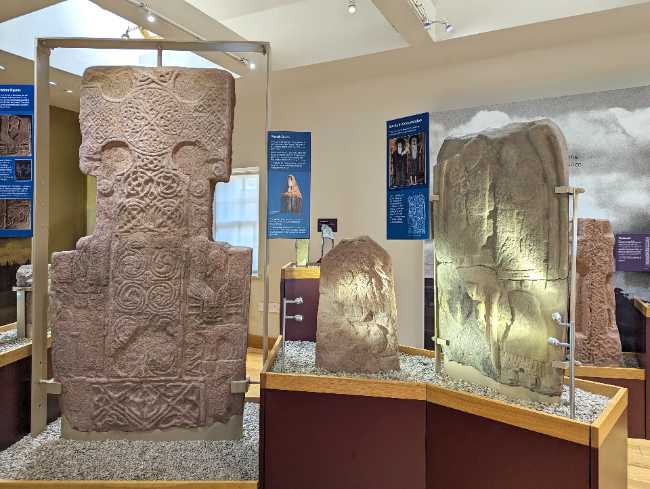
St Vigeans Stones Museum is located in the small village of St Vigeans, just outside Arbroath in Angus, with the postcode DD11 4RB. The museum sits among a handful of traditional cottages near the old church that crowns a natural mound in the village. Arbroath Abbey lies only a couple of miles away in the town itself and makes the most natural next stop. The substantial ruins of this medieval abbey carry deep historical weight and include displays that bring the site’s past to life. In Arbroath you will also find the Signal Tower Museum, which explores the town’s maritime story and the famous Bell Rock Lighthouse. A short drive further opens up the wider coastal and countryside attractions of Angus, while the quiet setting of St Vigeans itself offers a peaceful contrast to the busier town. Together the stones museum, abbey and local museums give a strong sense of the area’s long history, from early Christian carvings through to later centuries.