Dunstaffnage Castle
Dunstaffnage Castle, one of Scotland’s oldest stone fortresses, stands on a rocky promontory guarding the entrance to Loch Etive. Built in the 13th century by the powerful MacDougalls, it later became a strategic stronghold of the Campbells. A compelling fact is that the castle once held the Stone of Destiny after its removal from Scone, making it briefly the symbolic heart of Scottish kingship. Inside the curtain walls, visitors can explore the remains of the great hall and domestic ranges, which hint at the castle’s former grandeur. The battlements offer sweeping views over Argyll’s coastline, emphasising why this site was chosen for defence and control of maritime routes. The small but atmospheric gatehouse, rebuilt in the 1500s, contains exhibits on the castle’s history and the families who shaped it. Nearby stands the roofless Dunstaffnage Chapel, a 13th‑century structure with fine lancet windows and a peaceful woodland setting. Its survival adds a spiritual dimension to the castle’s story.
Dunbeg Scotland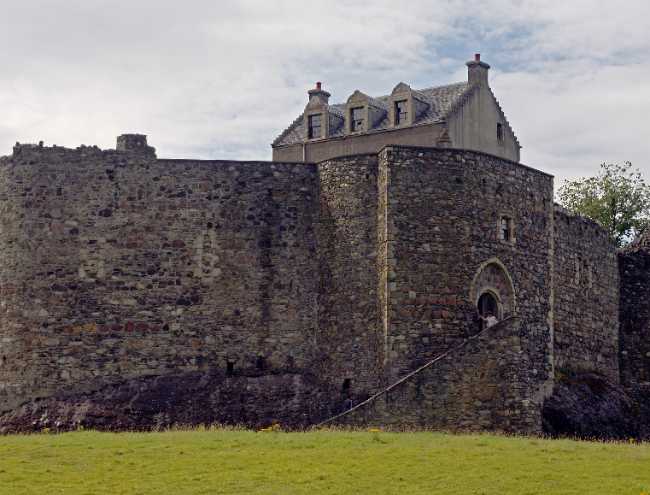
Dunstaffnage Castle stands at Castle Grounds in Dunbeg, just outside Oban in Argyll and Bute, with the postcode PA37 1PZ. Perched on a rocky promontory overlooking the Firth of Lorn and the entrance to Loch Etive, it is one of Scotland’s oldest stone castles and comes with the ruins of its nearby chapel. Oban itself is only a short drive away and offers Dunollie Castle and Museum, another historic stronghold with views over the bay and a collection that tells the story of the local clan. McCaig’s Tower rises above the town as a striking landmark, while the Oban Distillery provides a different kind of local heritage stop. A little further afield you can reach Kilchurn Castle on the shores of Loch Awe, a romantic ruin that makes a fine contrast to Dunstaffnage. The surrounding coastline and hills give easy access to quiet walks once you have explored the castle walls and the small chapel that sits nearby in the trees.