Duart Castle
Duart Castle, perched on a rocky headland on the Isle of Mull, is one of Scotland’s most dramatic clan strongholds. Seat of the Macleans, it dates to the 13th century and has witnessed centuries of conflict, alliances and maritime power. A striking fact is that the castle was rescued from ruin in 1911 by Sir Fitzroy Maclean, who bought back the ancestral seat and began an ambitious restoration that saved it from collapse. Inside, visitors can explore rooms that blend medieval architecture with clan history. The Great Hall displays portraits, weapons and artefacts that trace the Macleans’ turbulent past, including their role in Highland battles and naval skirmishes. The State Rooms contain period furnishings and personal items that reveal how the family lived during more peaceful eras. The dungeons and lower chambers offer a stark contrast, with thick stone walls and narrow passages that evoke the castle’s defensive purpose. Exhibits explain the castle’s strategic position overlooking the Sound of Mull, a vital maritime route for centuries.
Isle of Mull Scotland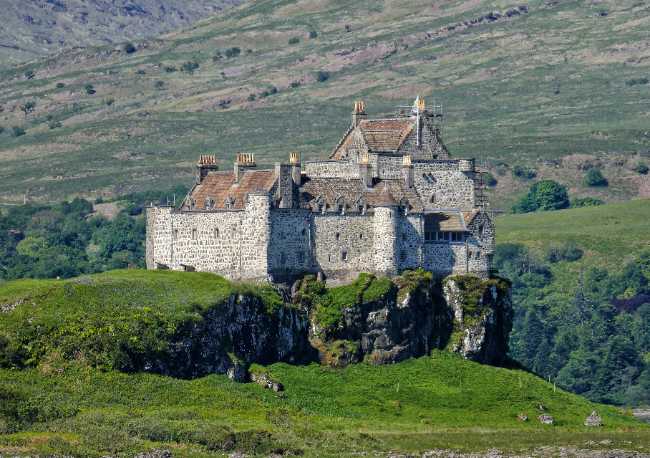
Duart Castle stands on the Isle of Mull in Argyll and Bute, with the postcode PA64 6AP. It sits on a rocky point about two or three miles from the ferry terminal at Craignure, looking out over the Sound of Mull and commanding wide sea views. Craignure itself is the nearest village and the main arrival point by ferry from Oban. A short drive or bus ride further north brings you to Tobermory, the colourful harbour town known for its waterfront and the Tobermory Distillery. From the west side of Mull you can take the short ferry to the Isle of Iona, home to the historic Iona Abbey, a place of deep early Christian significance. Closer to Duart you will also find the ruins of other old strongholds such as Aros Castle, while the open coasts and hills of Mull offer plenty of quiet walks once you leave the castle battlements behind.