Kilchurn Castle
Kilchurn Castle, rising dramatically at the head of Loch Awe, is one of Scotland’s most photographed ruins. Built in the mid‑15th century by the Campbells of Glenorchy, it later became a powerful garrison during the turbulent Jacobite era. A striking fact is that the castle once housed a long‑range barracks capable of accommodating 200 troops, making it one of the earliest purpose‑built military barracks in Scotland. Inside the ruined walls, visitors can explore the remains of the tower house, great hall and domestic ranges. The tower, though roofless, still conveys the ambition of the original builders, and its upper floors once offered commanding views over the loch and surrounding mountains. Interpretive panels help reconstruct how the castle functioned as both a residence and a strategic stronghold. The most atmospheric feature is the lakeside setting itself. When water levels are high, Kilchurn appears almost like an island fortress, emphasising its defensive design. The nearby viewpoint on the A819 offers one of Scotland’s most iconic castle panoramas.
Dalmally Scotland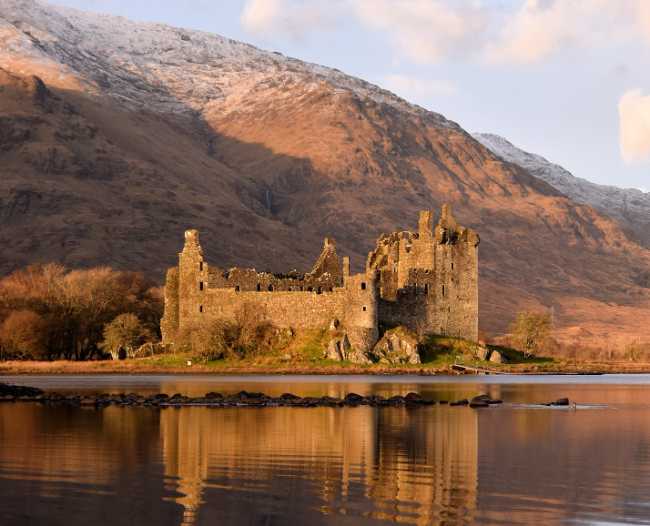
Kilchurn Castle stands at the north-eastern end of Loch Awe in Argyll and Bute, near the village of Lochawe and a short distance west of Dalmally, with the postcode PA33 1AF. The ruined fortress sits on a rocky peninsula that juts into the loch, creating one of the most photographed scenes in the Highlands. Just a few minutes away in Lochawe village you will find St Conan’s Kirk, an unusual and richly detailed church that blends different architectural styles and looks out over the same stretch of water. The wider shores of Loch Awe offer quiet paths and open views, while the nearby Cruachan power station, often called the Hollow Mountain, provides a contrasting underground experience. A little further south along the A819 lies Inveraray, with its own castle and jail museum, making an easy addition if you are exploring the area. The combination of the lochside ruin, the distinctive kirk and the surrounding hills gives a gentle mix of historic sites and open countryside.