Lismore Gaelic Heritage Centre
Lismore Gaelic Heritage Centre, known locally as Ionad Eilean Lios Mòr, is a beautifully designed cultural hub that celebrates the island’s deep Gaelic roots. Set near the medieval cathedral site, it offers a thoughtful blend of archaeology, language, landscape and community memory, making it one of Argyll’s most distinctive heritage stops. Inside, the museum’s displays trace Lismore’s long human story, from early Christian settlement to its role as a centre of learning in the medieval Kingdom of the Isles. Carved stones, ecclesiastical fragments and artefacts from nearby monastic sites reveal how influential the island once was. A highlight is the collection of objects linked to everyday Gaelic life: crofting tools, domestic items and fishing gear that show how islanders shaped their world through tradition and resourcefulness. The centre also places strong emphasis on language. Audio recordings, stories and songs introduce visitors to Lismore’s rich oral heritage, while interpretive panels explore how Gaelic shaped identity, place names and community bonds. Exhibits on local geology and wildlife help explain the island’s dramatic limestone landscape.
Isle of Lismore By Scotland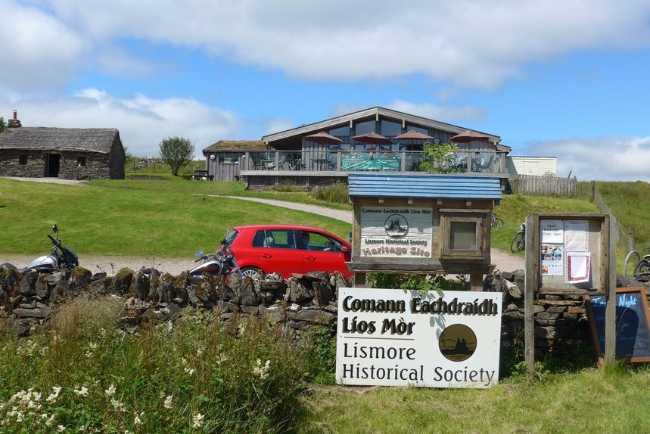
The Lismore Gaelic Heritage Centre is located on the tranquil Isle of Lismore in Argyll and Bute, Scotland. You can find this cultural hub at Ionad Naomh Moluag, Isle of Lismore, By Oban, PA34 5UL. Set in the heart of the island surrounded by peaceful countryside and coastal views, it is easily reachable after a brief ferry ride from Port Appin or Oban. The island is rich in history, offering a variety of ancient ruins, historic buildings, and heritage sites to explore nearby. Just down the road stands St Moluag’s Cathedral, a historic parish church built on the site of a 6th-century Celtic monastery that once served as the seat of the Bishop of Argyll. Nearby, you can also see the remains of a reconstructed traditional cottar's cottage adjacent to the museum complex. If you take a scenic walk or bike ride around the island, you will discover impressive historic fortresses and ancient monuments. Perched on a rocky promontory overlooking the water lie the dramatic, overgrown ruins of Castle Coeffin, a 13th-century hall-house built by the Clan MacDougall. Towards the southern end of the island, you can explore the remains of Achanduin Castle, another ancient stronghold with sweeping sea views. Scattered across Lismore, you will also spot prehistoric iron age brochs, standing stones, and quiet coastal paths that make exploring the island feel like stepping back into Scotland's distant past.