Caerlaverock Castle
Caerlaverock Castle, set within the Solway marshes, is one of Scotland’s most distinctive fortresses. Its striking triangular plan makes it instantly recognisable, and its moat, towers and battlements give a powerful sense of medieval defence. Built in the 13th century for the Maxwell family, it became a frontline stronghold during the Wars of Independence and later saw repeated sieges, including a dramatic one in 1640 that left the castle partly ruined. Inside, the remains of the Nithsdale Lodging are a highlight. This elegant Renaissance residence, built in the early 1600s, contrasts sharply with the rugged outer walls. Its carved stone façade, tall windows and refined proportions show how the Maxwells sought comfort and prestige even within a fortress. You can explore chambers, stairways and the great hall, imagining life when the castle was both home and military base. The outer courtyard reveals the castle’s defensive strength, with thick walls, arrow slits and the impressive twin‑towered gatehouse. Interpretive panels explain how Caerlaverock’s unusual shape helped control movement and withstand attack.
Glencaple Scotland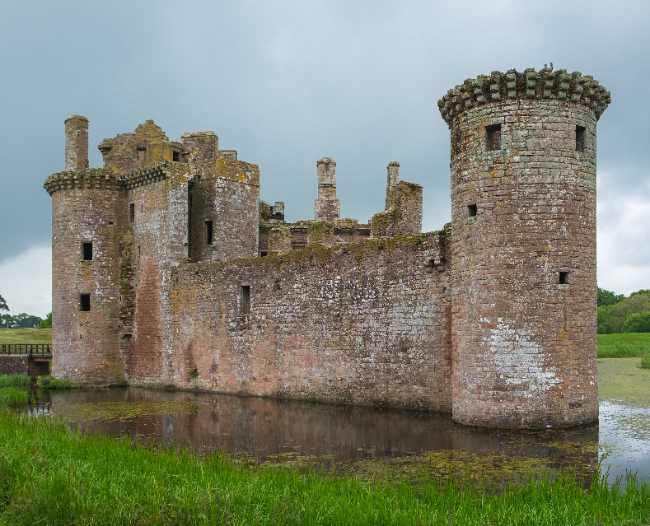
Caerlaverock Castle is located in the scenic Solway coast region near the village of Glencaple, just south of Dumfries in Dumfries and Galloway, Scotland. You can find this iconic triangular moated fortress at Castle Road End, Dumfries, DG1 4RU. Tucked away within a peaceful nature reserve, it sits overlooking the Solway Firth and the surrounding tidal salt marshes. The surrounding area is packed with grand historic ruins, quiet countryside landmarks, and regional heritage sites to explore. Right on the castle grounds, a short walking trail leads to the earthwork remains of Old Caerlaverock Castle. Just across the Nith Estuary in the village of New Abbey sits Sweetheart Abbey, a striking 13th-century red sandstone ruined monastery, alongside the historic water-powered New Abbey Corn Mill.Heading north into the town of Dumfries, you can visit the Robert Burns House and the Burns Centre museum, dedicated to Scotland's national poet, as well as the Devorgilla Bridge and the Dumfries Museum with its historic camera obscura. On the outskirts of town, you can explore the tranquil ruins of Lincluden Collegiate Church. Further along the coast to the east lies the Ruthwell Cross, a magnificent Anglo-Saxon carved stone monument housed inside Ruthwell Church. To the west, you can discover Drumcoltran Tower and Orchardton Tower, offering a fantastic look into medieval tower houses in southern Scotland.