Carsluith Castle
Carsluith Castle stands above the Solway coast as a compact yet atmospheric tower house, built in the late 15th century by the Cairns family. Its rugged silhouette, perched beside the old drovers’ road, made it both a defensive refuge and a symbol of status. One intriguing fact is that the castle’s owners were deeply entangled in local feuds; Robert Cairns was even fined for harbouring rebels, giving the site a faint echo of Border lawlessness. Inside, the castle offers a surprisingly rich sense of medieval domestic life. The ground floor contains the vaulted storage area, where provisions and valuables were kept safe behind thick stone walls. Climbing the narrow spiral stair, visitors reach the main hall — the heart of the residence — with its large fireplace and traces of plasterwork that hint at former comfort. Above, the private chambers reveal how the family lived day to day, with small windows framing views across Wigtown Bay. The upper floors also include a garderobe and remnants of timber flooring, allowing you to imagine the castle furnished and bustling. Though roofless today, Carsluith’s preserved structure makes it easy to picture its past life: a fortified home watching over trade routes, shaped by ambition, conflict and coastal winds.
Carsluith Scotland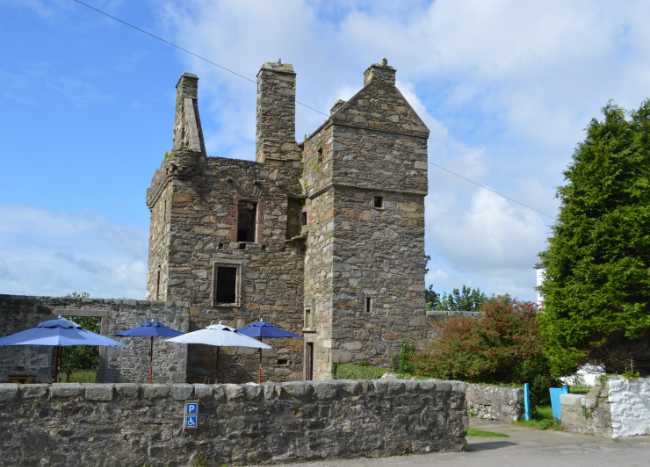
Carsluith Castle stands just off the A75, about three and a half miles south of Creetown in Dumfries and Galloway. The address is simply Wigtown Bay, Dumfries and Galloway, DG8 7DY. It sits right beside the road with views out over the bay, so you can hardly miss it as you drive past. Right nearby you’ll find the Cairn Holy Chambered Cairns, a pair of ancient Neolithic burial sites only a couple of miles away that feel quiet and atmospheric. A bit further on is Sorbie Tower, another ruined stronghold worth a look, and Cardoness Castle sits roughly six miles to the east if you fancy comparing tower houses. Galloway House Gardens offer a peaceful spot for a stroll, while Whithorn Priory and its museum take you deeper into the area’s early Christian story. Torhouse Stone Circle is also within easy reach if prehistoric sites appeal. Creetown itself is a handy base with a few local spots to explore, and the wider Galloway coastline and countryside give you plenty of open space and scenery once you’ve had a good look at the castle ruins. It’s a straightforward stop that fits nicely into a day’s wandering around this part of the region.