Drumcoltran Tower
Drumcoltran Tower is a sturdy 16th‑century tower house near Kirkgunzeon, built by the Maxwell family as a compact yet defensible residence. Its thick walls and narrow openings reflect the unsettled Border climate of the period, when even prosperous families needed protection. An interesting fact is that Drumcoltran remained occupied well into the 18th century, making it one of the region’s longest‑lived tower houses and preserving layers of domestic history within its modest footprint. Inside, the ground floor features a vaulted cellar used for storage, its cool stone interior ideal for keeping provisions safe. A tight spiral stair leads upward to the main hall, the social centre of the tower, where a large fireplace once warmed meals, gatherings and business dealings. The hall’s proportions reveal the Maxwells’ desire for comfort despite the building’s defensive nature. Higher floors contain private chambers with small windows overlooking the surrounding farmland. These rooms retain traces of plasterwork and original features that help visitors imagine the tower furnished and lived in. The top level, once used for watching over the estate, offers a sense of the tower’s strategic role. Drumcoltran Tower’s blend of simplicity, endurance and quiet rural character makes it a compelling survivor of Galloway’s fortified past.
Kirkgunzeon Scotland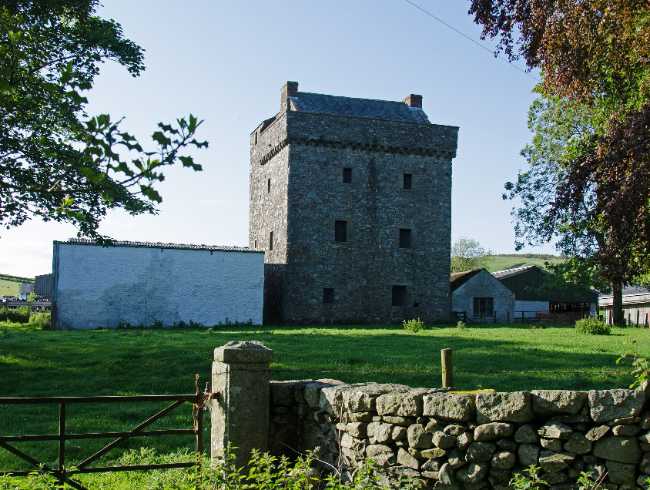
Drumcoltran Tower stands among farm buildings near the village of Kirkgunzeon in Dumfries and Galloway, about seven miles northeast of Dalbeattie. You’ll find it just off the A711, with the local postcode given as DG2 8LF. It’s a quiet rural spot, so look out for the brown tourist signs once you’re on the main road. The tower itself is a well-preserved 16th-century L-plan house that you can wander around at your own pace. Close by is the Motte of Urr, an impressive early medieval earthwork, while Buittle Castle offers another historic site a short drive away. A little further on sits Sweetheart Abbey, the beautiful red-sandstone ruin linked to the Balliol family, and New Abbey Corn Mill, a working example of traditional milling. Shambellie House, once a costume museum, is also in the same area if you fancy a change of scene. Dalbeattie itself is the nearest town for everyday facilities, and from here you can easily continue towards Castle Douglas for Threave Garden and its island castle, or head into Dumfries for the museums and Burns connections. The surrounding countryside is gentle and open, making the tower a peaceful stop that fits nicely into a day exploring this part of Galloway.