Burns House Museum
Burns House Museum in Mauchline is one of East Ayrshire’s most evocative literary landmarks, preserving the home where Robert Burns lived between 1784 and 1788—years that shaped his rise as Scotland’s national poet. The modest 18th‑century building sits beside the old jail and the churchyard he immortalised, creating a setting rich in atmosphere and local character. Inside, visitors can explore rooms restored to reflect Burns’s domestic life with Jean Armour, including period furnishings and objects connected to their time in Mauchline. Manuscripts, letters and early editions trace how Burns refined his craft here, producing poems and songs that would define his legacy. Displays also highlight the colourful social world of the village: the Mauchline Holy Fair, local characters, and the lively cultural scene that inspired many of his works. A particularly engaging section focuses on Jean Armour, offering insight into her life, resilience and role in Burns’s story. The museum’s collection of personal artefacts—everyday items, portraits and memorabilia—adds intimacy to the experience. Outside, the surrounding landmarks deepen the connection to Burns’s life, making the museum a compact but powerful tribute to creativity, community and the enduring spirit of Scotland’s bard.
Mauchline Scotland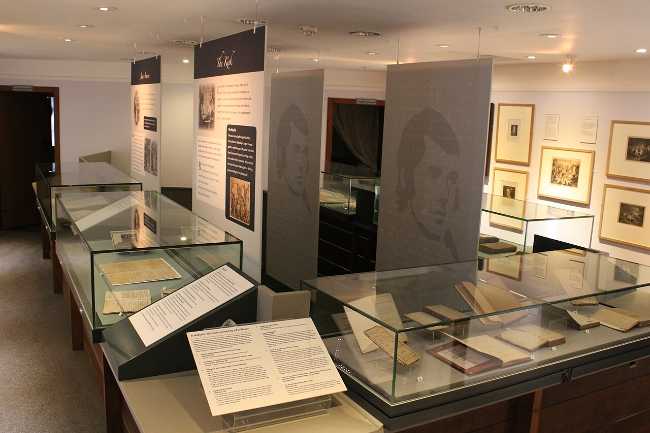
The Burns House Museum is located at Castle Street, Mauchline, KA5 5BZ, East Ayrshire, Scotland. Set inside the historic sandstone building where Robert Burns and Jean Armour first lived together as a married couple, this charming museum showcases original manuscripts, personal relics, traditional Mauchline ware, and exhibits reflecting the poet's life during his productive years in Ayrshire. The surrounding town of Mauchline and the wider East Ayrshire region are steeped in Scottish history and culture. Right across the street stands Mauchline Castle, also known as Gavin Hamilton’s House, where Burns was a frequent guest. Just a short walk away is Poosie Nansie’s Hostelry, a famous tavern mentioned in his writings, alongside the local parish kirkyard where many characters from his poems are buried.Traveling further around the countryside opens up more historic destinations. Heading south toward Cumnock brings you to Dumfries House, a magnificent 18th-century stately home featuring vast estate gardens and rare Chippendale furniture, as well as the Baird Institute, which showcases regional industrial history. Drive north toward Kilmarnock to explore Dean Castle and Country Park, a dramatic 14th-century fortress set in lush woodland, or visit The Dick Institute, one of Ayrshire’s premier museum and art gallery spaces housing extensive social history and natural science collections.