Old Penicuik House
Old Penicuik House in Midlothian is one of Scotland’s most atmospheric architectural ruins, a grand 18th‑century mansion preserved in a state of elegant decay. Built for Sir James Clerk and designed by Sir Robert Adam, it once stood as a model of classical refinement. A devastating fire in 1899 left the house roofless, but its stone shell survived, creating one of the country’s most striking examples of a “managed ruin.” Inside, visitors can walk through restored corridors and chambers where the original proportions remain intact. The conservation project stabilised the structure without erasing its history, allowing you to see Adam’s refined detailing—arched doorways, balanced room layouts and fragments of decorative plasterwork—set against the raw textures of exposed stone. One of the most intriguing features is the grand staircase, now open to the sky, which hints at the building’s former splendour. Interpretive displays explain the Clerk family’s long connection to the estate, including their role in the arts and sciences. The house also contains remnants of the family’s once‑extensive art collection, with selected pieces displayed to illustrate the cultural life that once filled these rooms.
Penicuik Scotland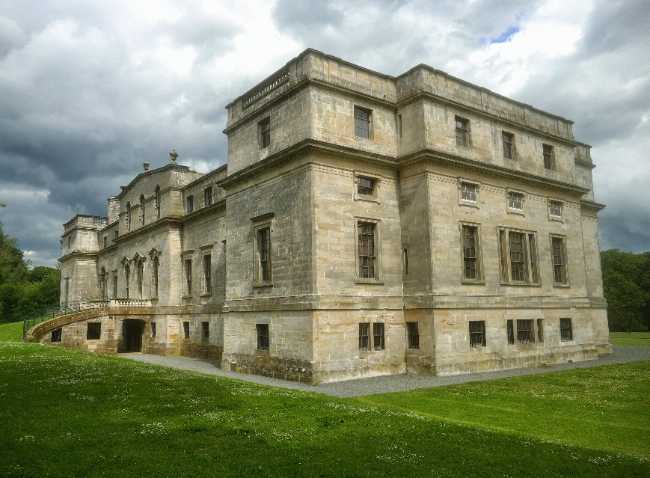
The house is located at Penicuik Estate, Penicuik, Midlothian, EH26 9LA, United Kingdom. It sits just southwest of the town of Penicuik, about ten miles south of central Edinburgh. Because of its setting at the foot of the Pentland Hills, visiting Old Penicuik House puts you within easy reach of several historic castles, historic sites, and natural attractions. A short drive east leads to world-famous Rosslyn Chapel, renowned for its intricate stone carvings, along with the romantic ruins of Roslin Castle perched over the River North Esk. Heading slightly southeast brings you to Dalkeith Palace, set within Dalkeith Country Park, as well as the historic Newbattle Abbey and the National Mining Museum Scotland at Newtongrange. You can also explore nearby Glencorse Reservoir, visit the ruins of Uttershill Castle, or head north to Craigmillar Castle.
 Museum