Kirbuster Farm Museum
Kirbuster Farm Museum is one of Orkney’s most atmospheric heritage sites, a rare surviving example of a traditional “firehoose” where the central hearth burned on an open floor without a chimney. The farm dates back to the 16th century, and one of its most intriguing features is the smoke‑blackened rafters, still bearing the marks of centuries of peat fires. Kirbuster is also believed to be the last un‑chimneyed farmhouse in Northern Europe to remain in use until the 20th century, which gives the place an unusually authentic feel. Inside, you can explore the longhouse, complete with flagstone floors, box beds and the open hearth that once served as the heart of family life. The adjoining barn and byre display historic farming tools, showing how Orkney’s rural communities worked the land. A small Victorian parlour contrasts sharply with the older rooms, offering a glimpse of changing domestic tastes. One highlight is the beautiful garden, laid out in the 1890s by the farm’s owner, William Hourston. Its winding paths, old trees and traditional layout make it one of Orkney’s most charming historic gardens.
Kirbuster Scotland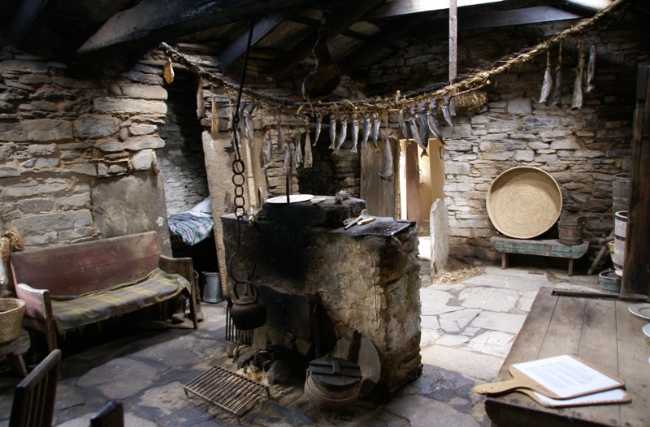
Kirbuster Farm Museum sits quietly on Hundland Road in Birsay, on the West Mainland of the Orkney Islands, with the simple address Hundland Road, Birsay, Orkney, KW17 2LR. It is tucked into the northern part of the mainland, a short drive from the village of Birsay itself and only about twenty-five minutes from Kirkwall if you are coming that way. The museum gives a real sense of old Orkney farm life, and once you have wandered around its traditional firehoose and gardens it is easy to keep exploring the area. Just a few minutes up the road you reach the ruins of the Earl’s Palace in Birsay, a striking sixteenth-century residence that still shows the ambition of the earls who once ruled here. Beside it stands St Magnus Church, a peaceful little place with deep local roots. A short walk or drive further brings you to the Brough of Birsay, a tidal island that holds the remains of a Norse settlement and an early Christian site, best visited when the tide is out. Not far away is the Click Mill, a rare surviving example of an old horizontal water mill, and the cliffs at Marwick Head, where seabirds nest in season and the Kitchener Memorial stands looking out to sea. If you fancy another look at traditional island farming, Corrigall Farm Museum is only a short hop to the south-east and makes a good companion visit.