Gunsgreen House
Gunsgreen House in Eyemouth is one of the Scottish Borders’ most intriguing historic buildings, famous for its elegant Georgian façade and its dramatic past as a hub of 18th‑century smuggling. Built in 1753 for local merchant John Nisbet, it was cleverly designed with hidden features that helped smugglers outwit customs officers. Today, the house is a museum where refined architecture meets tales of daring coastal trade. Inside, visitors can explore the tea chute, a secret passage used to drop contraband tea directly into the cellar, safely out of sight. The cellars themselves are atmospheric, with vaulted ceilings and exhibits explaining how Eyemouth’s smugglers operated under cover of darkness. The attic offers another highlight: a recreated smugglers’ hideout showing how goods were concealed before distribution. The grand rooms upstairs reveal the respectable face of Nisbet’s life, with period furnishings, portraits and views over the harbour. Interpretive displays explain the economic pressures that drove smuggling and the ingenious methods used to evade detection.
Eyemouth Scotland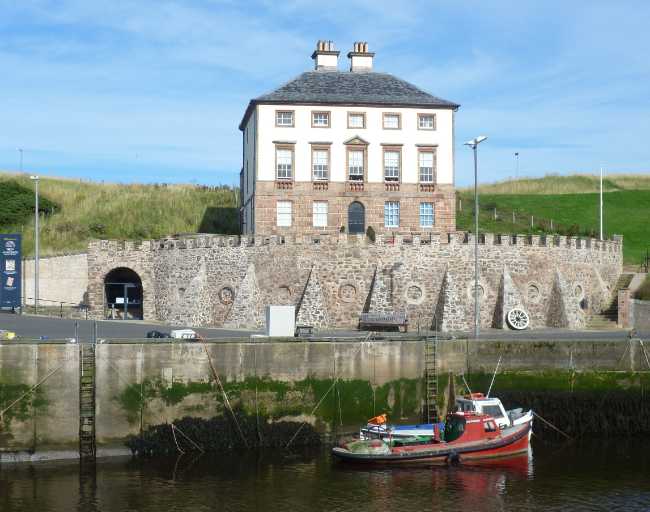
Gunsgreen House is a grand 18th-century Georgian mansion built on the edge of Eyemouth harbour with a dramatic double life. Designed in the 1750s by the famed architect John Adam for local merchant John Nisbet, the house was secretly constructed to serve as a high-level smuggling hub. The house is located at Gunsgreen Quay, Eyemouth, Scottish Borders, TD14 5SD, Scotland, United Kingdom. It sits directly on the harbour front overlooking the coastal town of Eyemouth.Because of its coastal position in the eastern Borders, visiting Gunsgreen House puts you right next to several unique maritime and historic sites. A short walk across the harbour brings you into town to explore the Eyemouth Museum, which details the region's fishing heritage and local history. Heading just a few miles north along the dramatic coastline leads to Coldingham Priory, the scenic Coldingham Bay, and the dramatic sea cliffs of St Abbs Head. Traveling inland or further south toward the English border opens up easy visits to Paxton House, Ayton Castle, and the historic walled town of Berwick-upon-Tweed.