Hume Castle
Hume Castle, perched high above the village of Hume, is one of the most distinctive landmarks in the Scottish Borders. Although its dramatic silhouette suggests a medieval fortress, much of what stands today is an 18th‑century reconstruction built on the foundations of a genuine 13th‑century stronghold of the powerful Home family. Its unusual battlements, shaped almost like giant teeth, were added as a romantic gesture rather than for defence, giving the castle its instantly recognisable profile. Inside the courtyard, visitors can explore the surviving sections of the original medieval walls, which hint at the scale of the earlier fortress that once controlled this strategic stretch of countryside. Interpretation panels explain the Home family’s turbulent history, including their role in border conflicts and their involvement in major national events. The castle’s elevated position also made it a natural lookout, and its beacon was famously lit in 1804 during the Napoleonic invasion scare, mistakenly signalling that enemy forces had landed. Although the interior buildings no longer survive, the site’s atmosphere is compelling. Climbing the ramparts offers sweeping views across the Merse and Lammermuirs, revealing why this hilltop was so fiercely contested.
Kelso Scotland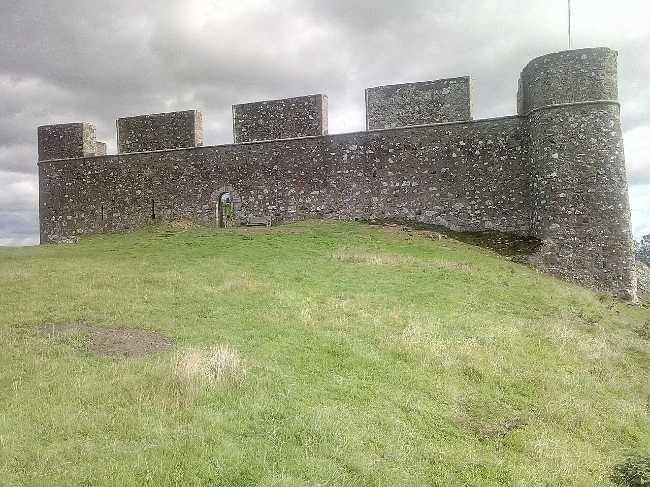
Hume Castle is a striking hilltop fortress that offers panoramic views across the entire Merse plain and the Cheviot Hills. Originally built in the 13th century as the ancestral seat of the powerful Home family, this strategic stronghold saw centuries of intense action during the Anglo-Scottish Border Wars. It was repeatedly besieged, captured, and eventually dismantled by Oliver Cromwell’s forces in 1651. The castle is located at Hume, Greenlaw, Near Kelso, Scottish Borders, TD5 7TR, Scotland, United Kingdom. It sits perched high on a prominent volcanic outcrop in the quiet village of Hume. Because of its elevated position in the eastern Borders, visiting Hume Castle places you close to many historic fortresses and country estates. Just a short drive south brings you to the grand Floors Castle and the towering ruins of Kelso Abbey in the market town of Kelso. Heading southwest leads to the well-preserved 15th-century Smailholm Tower, as well as the elegant Georgian estate at Mellerstain House. Traveling further west brings you toward the medieval ruins of Dryburgh Abbey, Melrose Abbey, and Sir Walter Scott's home at Abbotsford House, while heading north leads toward Thirlestane Castle in Lauder.
 Castle
 Tower