Biggar Gasworks Museum
Biggar Gasworks Museum is one of South Lanarkshire’s most unusual industrial heritage sites, preserving a complete small‑town gasworks exactly as it operated in the late 19th and early 20th centuries. Opened in 1839, it supplied Biggar with coal gas for lighting, heating and cooking until 1973, making it one of the last working gasworks in Scotland. Its survival is exceptional: most similar plants were demolished, but Biggar’s was saved intact, offering a rare glimpse into a vanished technology. Inside, visitors can explore the retort house where coal was heated to produce gas, the purifier building, the meter room and the manager’s office, all filled with original machinery. The retorts, benches, pipework and tools remain in place, creating an authentic sense of how gas was manufactured before natural gas replaced town gas nationwide. Interpretation panels explain each stage of production, from coal delivery to distribution through the town’s network. One of the most interesting features is the working gas lamp demonstration, showing how streets and homes were once illuminated. The museum also displays domestic gas appliances—from early cookers to heaters and lamps—revealing how gas transformed everyday life.
Biggar Scotland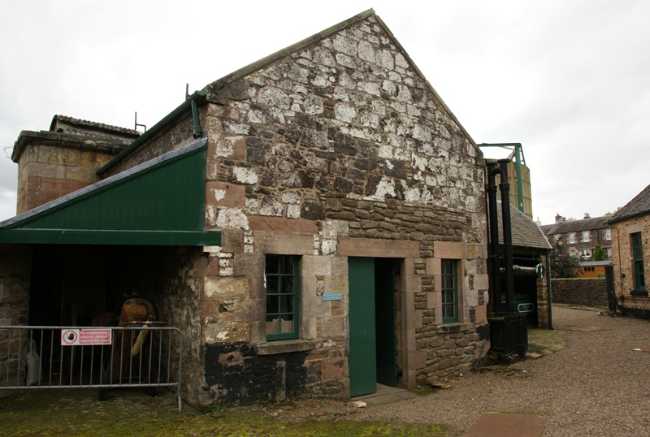
Biggar Gasworks Museum sits just off the main street in the market town of Biggar in South Lanarkshire. You’ll find it on Gas Works Road, Biggar ML12 6BZ, only a short walk from the High Street. It’s the only complete gasworks left in Scotland, a remarkably intact industrial site that made coal gas for the town from the 1830s until the 1970s. You can still see the old retorts, holders, coal sheds and tools that show how everyday gas was produced. Right in Biggar itself you can also visit the Biggar & Upper Clydesdale Museum on the High Street, along with the Greenhill Covenanters’ House and Gladstone Court. A little further out is Coulter Motte, the remains of a medieval motte-castle, and the wider area offers easy links to New Lanark World Heritage Site and other historic spots in Upper Clydesdale. It’s a quiet, hands-on stop that fits nicely with the town’s other small museums and nearby countryside.