Flint Castle
Standing beside the Dee Estuary, Flint Castle is one of the most historically significant fortresses in Wales. Built between 1277 and 1284 on the orders of King Edward I, it was the first stronghold in the chain of castles later known as the “Iron Ring,” constructed to secure English control over North Wales. Its strategic location allowed supplies to arrive by both sea and river, making it a vital military base during Edward’s campaigns. One of the castle’s most remarkable features is its unusual detached keep, or donjon. Unlike most medieval castles, this massive round tower was separated from the main fortress by its own moat and drawbridge, creating a powerful final line of defence. The design was highly innovative for its time and remains one of the castle’s most distinctive characteristics. Visitors exploring the ruins can walk through the remains of the inner ward, admire the surviving curtain walls, and study the impressive corner towers that once protected this formidable stronghold. The layout of the castle is still clearly visible, making it easy to imagine how soldiers and nobles lived within its defences. The waterfront setting also provides attractive views across the estuary towards England.
Flint Wales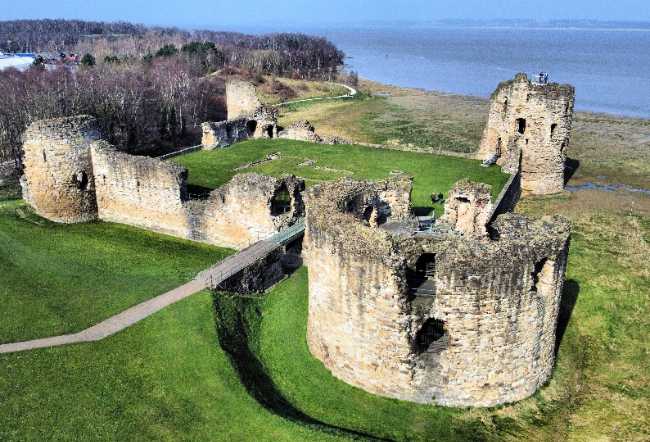
Flint Castle is a historic stronghold famous for being the very first fortress built by King Edward I during his 13th-century campaign to conquer Wales. Constructed between 1277 and 1284 along the shores of the Dee Estuary, the castle features a unique design dominated by a massive, detached circular keep separated from the main inner ward by its own moat. The castle is located at Castle Street, Flint, Flintshire, CH6 5PF, Wales, United Kingdom. It stands right on the edge of the Dee Estuary foreshore, just a short walk from Flint town centre and the railway station. Because of its coastal position in eastern Flintshire, visiting Flint Castle places you within easy reach of several key historic sites and attractions. Just a short drive west leads to the ruins of Basingwerk Abbey and the Greenfield Valley Heritage Park and Museum, where you can explore industrial heritage and historic farm buildings. Nearby in Holywell stands the ancient St Winefride's Well and Shrine, one of the oldest continually visited pilgrimage sites in Britain. Heading south brings you to the native Welsh fortress of Ewloe Castle hidden in the woodlands of Wepre Park, while traveling further across the county opens up access to Hawarden Castle, Denbigh Castle, and Bodelwyddan Castle.