Raglan Castle
Rising above the rolling countryside of Monmouthshire, Raglan Castle is one of the most magnificent late medieval castles ever built in Wales. Unlike many earlier fortresses designed purely for war, Raglan was created as both a stronghold and a luxurious residence. Construction began in the 15th century under Sir William ap Thomas, known as the “Blue Knight of Gwent,” and was later expanded into a grand fortress-palace by the powerful Herbert and Somerset families. The castle’s most famous feature is the remarkable Great Tower, also known as the “Yellow Tower of Gwent.” Surrounded by its own moat and connected to the main castle by a bridge, this striking hexagonal structure dominates the landscape and remains one of the most distinctive castle towers in Britain. Inside the castle grounds, visitors can explore the impressive gatehouse with its defensive machicolations, vast courtyards, grand hall, kitchens, private apartments, and the remains of a long gallery that once reflected the wealth and status of its owners. Decorative stonework and elegant architectural details reveal how Raglan was designed to impress guests as much as intimidate enemies.
Raglan Wales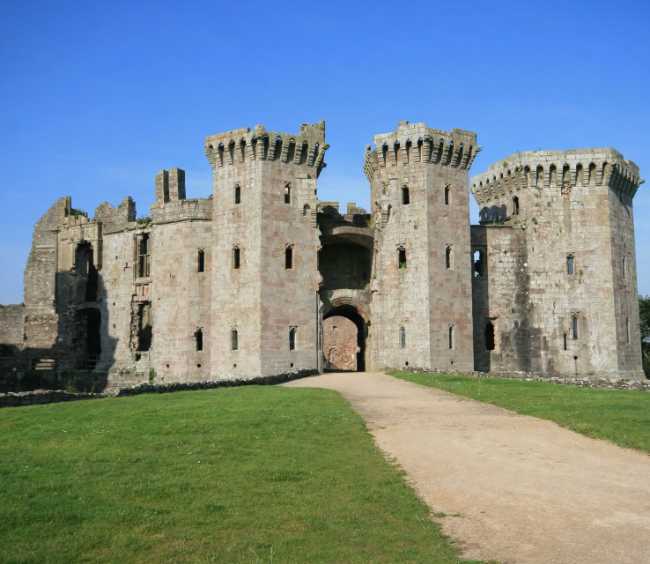
Raglan Castle is one of the grandest and most striking late-medieval fortresses in Wales. Unlike earlier Norman strongholds built purely for warfare, Raglan was constructed primarily for luxurious display and comfort by Sir William ap Thomas and his son William Herbert in the 15th century. The castle is located at Castle Road, Raglan, Monmouthshire, NP15 2HJ, Wales, United Kingdom. It stands just off the A40 road, about a mile northern edge of Raglan village amidst rolling green fields. Because of its central setting in Monmouthshire, visiting Raglan Castle places you near many remarkable historic and cultural attractions. A short drive east brings you to Monmouth, where you can explore Monmouth Castle ruins, the Regimental Museum, and the famous medieval Monnow Bridge. Driving south leads to the grand cliffside fortress of Chepstow Castle, the roofless ruins of Tintern Abbey, and the ancient stone fort of Caldicot Castle. Heading west takes you straight into Abergavenny, home to Abergavenny Castle and Museum, as well as the world-famous UNESCO industrial heritage site of the Big Pit National Coal Museum in Blaenavon.