Skenfrith Castle
Nestled beside the River Monnow in the peaceful village of Skenfrith, Skenfrith Castle is one of the most attractive medieval castles in southeast Wales. Built by the Normans following their conquest of England, the fortress was established to guard the important route between Wales and Hereford. Along with Grosmont Castle and White Castle, it formed the famous “Three Castles” defensive network that protected this turbulent border region for centuries. The castle seen today largely dates from the early 13th century, when the powerful royal official Hubert de Burgh rebuilt the site in stone. Unlike many Welsh castles, Skenfrith features a distinctive circular keep positioned at the centre of the courtyard rather than against the outer walls. This unusual design provided a final refuge if attackers breached the castle’s defences. Visitors can explore the impressive curtain walls, the remains of three round corner towers, and the striking central keep that dominates the site. Traces of former domestic buildings, including living quarters and kitchens, help illustrate daily life within the castle. The circular keep still displays remnants of fireplaces, windows, and other architectural details that reveal how it once functioned as both a defensive structure and a residence.
Skenfrith Wales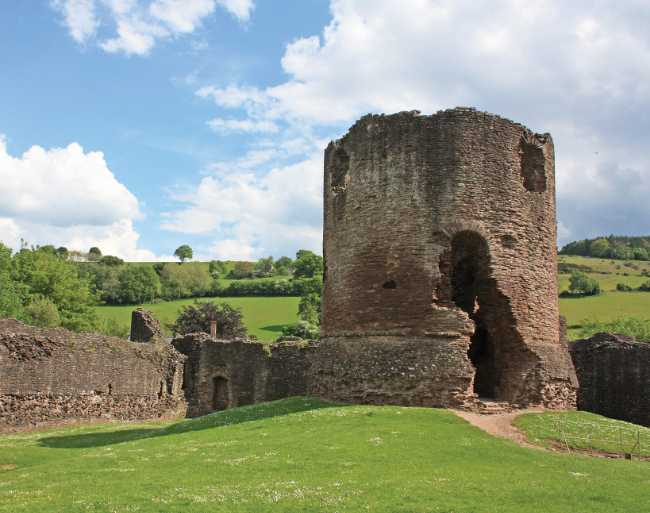
Skenfrith Castle is a charming medieval ruin set beside the tranquil banks of the River Monnow. Built by the Normans shortly after the Conquest and later rebuilt in stone by Hubert de Burgh in the early 13th century, it formed part of the famous Three Castles group alongside Grosmont and White Castle. The castle is located at Skenfrith, Abergavenny, Monmouthshire, NP7 8UH, Wales, United Kingdom. It sits right in the small village of Skenfrith along the B4521 road, near the English border. Because of its setting in the scenic Monnow Valley, visiting Skenfrith Castle puts you close to many notable historical and cultural attractions. Right across from the castle grounds stands the historic 13th-century St Bridget’s Church. A short drive away leads to its companion border fortresses, Grosmont Castle and the impressive White Castle. Heading south toward Monmouth allows you to explore Monmouth Castle, the Regimental Museum, and the famous fortified Monnow Bridge. Driving further into the Wye Valley opens up access to the romantic roofless ruins of Tintern Abbey, the grand cliffside Chepstow Castle, and the formidable moated ruins of Raglan Castle.