White Castle
Set amid the rolling countryside of Monmouthshire, White Castle is widely regarded as one of the finest and most imposing medieval fortresses in Wales. Built by the Normans after 1066 to guard the route between Wales and Hereford, it later became part of the famous “Three Castles” defensive network alongside Grosmont Castle and Skenfrith Castle. The castle takes its name from the pale rendering that once covered its stone walls, giving the fortress a striking white appearance visible from afar. Originally constructed from earth and timber, it was transformed during the 13th century into a formidable stone stronghold with powerful curtain walls, towers, gatehouses, and extensive defensive works. Historians have described it as a masterpiece of medieval military engineering. Visitors entering the castle first pass through the vast outer ward, an enclosed area so large it has been compared to a football pitch. Beyond lies the impressive inner ward, protected by a deep, water-filled moat and substantial stone walls. The twin-towered gatehouse, defensive passages, and curtain walls provide an excellent impression of how heavily fortified the castle once was.
Whitecastle Wales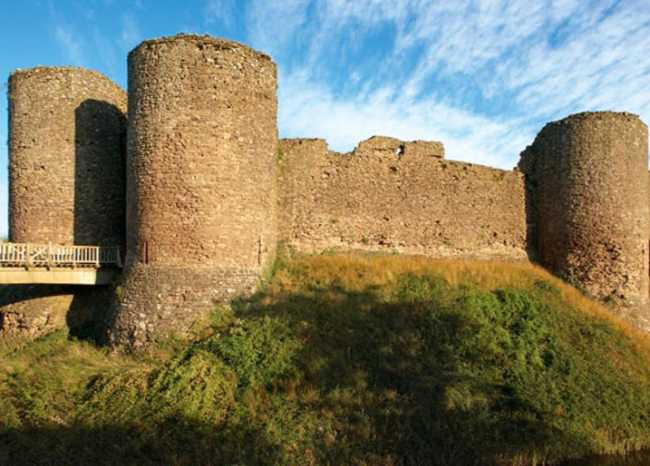
White Castle is arguably the best preserved and most visually striking of the famous Three Castles of Monnington. The castle is located at White Castle, Llantilio Crossenny, Abergavenny, Monmouthshire, NP7 8HG, Wales, United Kingdom. It stands in a countryside setting near the village of Llantilio Crossenny, midway between Abergavenny and Monmouth. Because of its central location in northern Monmouthshire, visiting White Castle places you close to many notable historic and cultural attractions. Just a short drive away lie its companion border fortresses, Grosmont Castle and Skenfrith Castle, completing the famous trio. Heading west brings you into the historic market town of Abergavenny, home to Abergavenny Castle and Museum and the ancient St Mary’s Priory Church. Driving east towards Monmouth opens up access to Monmouth Castle ruins, the historic Monnow Bridge, and the Regimental Museum, while heading south leads straight to the grand moated ruins of Raglan Castle.