Wiston Castle
Wiston Castle is one of Pembrokeshire’s lesser-known but historically significant Norman strongholds. Built in the early 12th century by the Flemish settler Wizo, from whom the castle takes its name, it formed part of a chain of fortifications established to secure Norman control over southwest Wales. Although now a ruin, Wiston remains an important example of an early motte-and-bailey castle and offers visitors a fascinating glimpse into the turbulent medieval frontier. The castle is best known for its remarkably preserved stone gatehouse, considered one of the finest surviving Norman gatehouses in Wales. This impressive structure once served as the main entrance to the fortress and demonstrates the growing sophistication of military architecture during the medieval period. Its thick walls, defensive features, and commanding position highlight the strategic importance of the site. Visitors exploring Wiston Castle can walk around the earthwork motte, the remains of the defensive ditch, and the surviving masonry that once formed part of a much larger fortification. Although less extensive than some of Wales’ grand castles, the ruins provide a strong sense of the castle’s original layout and purpose. Information panels help explain the site's development and the role it played in regional conflicts.
Wiston Wales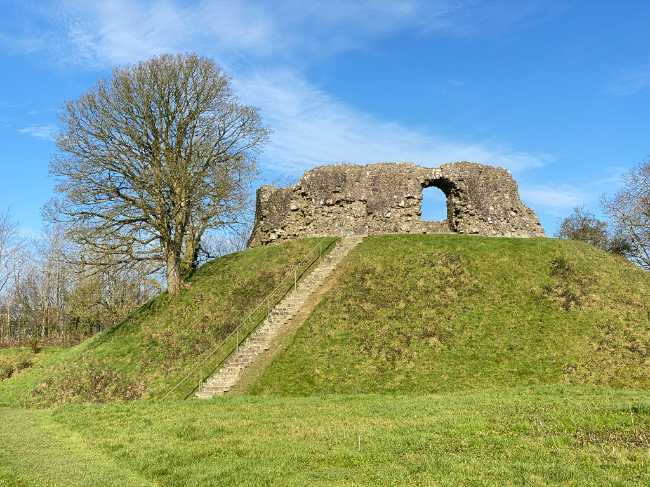
Wiston Castle is one of the best-preserved Norman motte-and-bailey castles in Wales. The castle is located at Wiston, Haverfordwest, Pembrokeshire, SA62 4PN, Wales, United Kingdom. It stands right in the quiet village of Wiston, roughly six miles east of Haverfordwest. Because of its central setting in Pembrokeshire, visiting Wiston Castle places you close to many notable historic and cultural attractions. A short drive west brings you to Haverfordwest, home to the sprawling ruins of Haverfordwest Castle and the Haverfordwest Town Museum. Heading south leads to the spectacular moated medieval fortress of Carew Castle and Tidal Mill, as well as the grand stronghold of Picton Castle and its historic gardens. Driving slightly west or south opens up easy access to the massive medieval fortress of Pembroke Castle and the ancient iron age reconstruction at Castell Henllys.