Bronllys Castle
Standing on a grassy mound above the River Llynfi, Bronllys Castle is one of the best-preserved Norman fortifications in mid-Wales. Although much of the original castle has vanished, its impressive circular stone keep still dominates the landscape and offers visitors a fascinating glimpse into more than 800 years of Welsh border history. The castle began as a timber motte-and-bailey fortress in the late 11th or early 12th century, built by Norman lords seeking to control this strategically important region. During the 13th century, the timber defences were replaced by the substantial stone tower that survives today. Because Bronllys stood within the turbulent Welsh Marches, ownership changed several times as English and Welsh rulers competed for control of the area. The highlight of any visit is the great round keep, considered one of the finest surviving examples of its type in the Welsh borderlands. Unlike many ruined castles, visitors can climb through its three levels and explore rooms that once housed the lord and his household. Inside, look for the medieval fireplaces, window seats, narrow stairways, and defensive features designed to protect the fortress from attack.
Bronllys Wales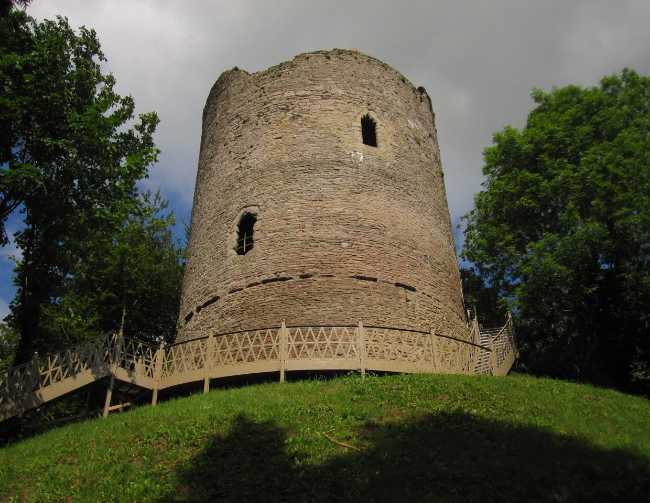
Bronllys Castle is an impressive stone ruin featuring a remarkably well-preserved 13th-century round tower keep perched atop an earlier Norman motte. Originally built as a timber motte-and-bailey fortress around 1100 by William Revel, a follower of Bernard de Neufmarché, the site was later rebuilt in stone to secure the strategic crossing of the River Llynfi. The castle is located at Bronllys, Brecon, Powys, LD3 0HL, Wales, United Kingdom. It stands just on the outskirts of the village of Bronllys, situated right off the A438 road between Talgarth and Hay-on-Wye. Because of its position in southern Powys near the edge of the Bannau Brycheiniog National Park, visiting Bronllys Castle puts you within easy reach of many historic and cultural attractions. Just a short drive northeast brings you to Hay-on-Wye, famous for its historic Hay Castle, independent bookstores, and proximity to the ruins of Llanthony Priory. Heading west along the river leads to the historic market town of Brecon, home to the imposing Brecon Cathedral, the Royal Welsh Regimental Museum, and the medieval ruins of Brecon Castle. Heading slightly south opens up easy access to Tretower Court and Castle, the grand ruins of Crickhowell Castle, and the historic town of Abergavenny.