South Foreland Lighthouse
Perched high on the famous White Cliffs of Dover, South Foreland Lighthouse is one of Britain’s most significant maritime landmarks. Built in 1846, although warning lights have stood on this headland since the 14th century, the lighthouse was designed to help ships navigate safely past the dangerous Goodwin Sands, a notorious sandbank responsible for countless shipwrecks over the centuries. What makes South Foreland particularly remarkable is its place in the history of technology. It was the first lighthouse in the world to use an electric light, making it a pioneering achievement of the Victorian age. The site later became famous for experiments by Guglielmo Marconi, who carried out groundbreaking wireless communication tests here, including some of the earliest ship-to-shore and international radio transmissions. Inside, visitors can discover what life was like for Victorian lighthouse keepers. The beautifully preserved tower contains historic machinery, including the clockwork mechanism that once controlled the flashing light. Guided tours lead visitors through the lighthouse’s fascinating history and engineering innovations, bringing the stories of its keepers and inventors to life.
Saint Margaret's Bay United Kingdom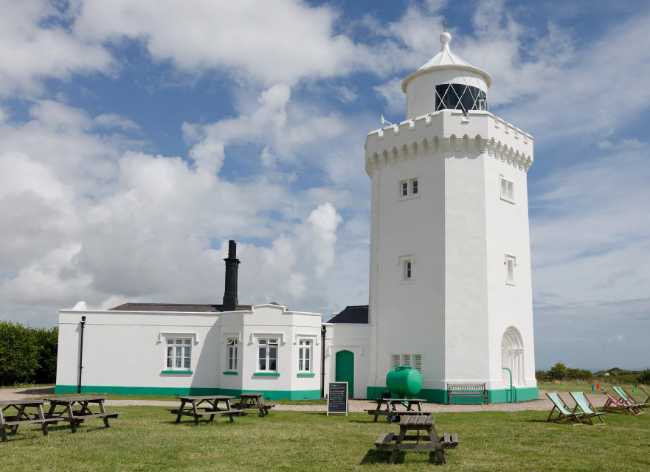
South Foreland Lighthouse is a wonderful Victorian landmark perched high upon the iconic White Cliffs of Dover. Built in 1843, this historic lighthouse played a monumental role in maritime navigation and holds a special place in history as the site where Guglielmo Marconi received the first-ever international radio transmission from a ship at sea in 1899. The lighthouse is located at The Front, St Margaret's at Cliffe, Dover, CT15 6HP, Kent, England, United Kingdom. It sits nestled within the sweeping clifftop landscape just east of Dover. Because of its dramatic coastal setting in Kent, visiting South Foreland places you close to some of England's most famous historic landmarks and attractions. A short walk along the cliff tops brings you right to the medieval fortress of Dover Castle and its secret wartime tunnels. Heading slightly further inland or down into the town opens up access to the Dover Museum, the Roman Painted House, and the bustling port terminal, while traveling a bit further west along the coast leads to the historic seaside town of Folkestone.