Cape Wrath Lighthouse
Perched on the rugged cliffs of north-west Scotland, Cape Wrath Lighthouse stands at one of the most remote and dramatic locations in the United Kingdom. Overlooking the fierce waters where the Atlantic Ocean meets the North Sea, the lighthouse has guided mariners through these hazardous seas since 1828. Its isolated setting, surrounded by towering cliffs and sweeping coastal wilderness, makes it one of Scotland’s most memorable lighthouse destinations. Designed by celebrated engineer Robert Stevenson, the lighthouse rises above Cape Wrath, a name derived from the Old Norse word hvarf, meaning “turning point.” For Viking sailors, this headland marked a crucial navigation point when travelling around Britain. The lighthouse itself became an essential aid to shipping and remains a working beacon today. Visitors who gain access to the lighthouse grounds can admire the impressive stone tower and former keeper’s buildings, which once housed the families and staff responsible for maintaining the light. Although entry to the lantern room is not normally available, the exterior reveals fascinating details of nineteenth-century lighthouse engineering. The former living quarters offer a glimpse into the challenging life of lighthouse keepers who worked in one of Britain’s most isolated environments.
Cape Wrath Scotland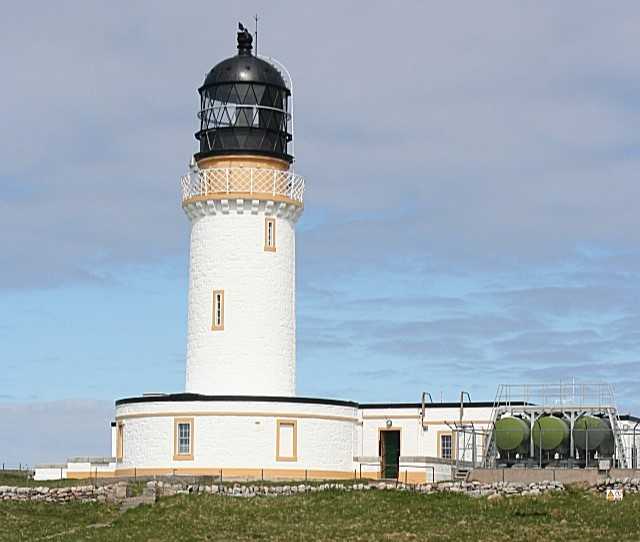
Cape Wrath Lighthouse sits at the most north-westerly tip of mainland Britain, high on the cliffs in the far north of the Scottish Highlands, in the traditional county of Sutherland. The nearest village is Durness, about ten miles to the south-east, and the full address is simply Cape Wrath, near Durness, Highland, IV27.Built in 1828 by Robert Stevenson, the white granite tower stands among a small group of former keepers’ cottages on this remote headland. Reaching it usually means a short passenger ferry across the Kyle of Durness from Keoldale, followed by a minibus ride or a long walk along the only track that crosses the wild Parph moorland.Close by you can explore the ruins of the old Lloyd’s signal station that once tracked shipping, and the dramatic sea stacks and cliffs that drop sheer into the Atlantic. A short drive from Durness brings you to Smoo Cave, a large limestone cavern you can walk into, and the peaceful ruins of Balnakeil Church. Further along the coast lies Sandwood Bay, a long stretch of empty sand often ranked among Scotland’s finest beaches. A little further afield is the Strathnaver Museum, which tells the story of the local clearances, and the well-preserved Dun Dornaigil Broch, an ancient stone tower. The whole area feels properly remote, so bring supplies and check the weather before you set out.