St Magnus Cathedral
Built from distinctive red and yellow sandstone, the cathedral is a striking example of Romanesque architecture, with later Gothic additions enhancing its grandeur. Unlike many Scottish cathedrals, it survived the Reformation largely intact, allowing visitors to experience a remarkably complete medieval church. Inside, the soaring nave impresses with its massive columns, rounded arches, and rich atmosphere. One of the cathedral’s most important attractions is the shrine and resting place of St Magnus, whose story of faith, sacrifice, and sainthood remains central to Orkney’s history. Nearby, visitors can also find the remains of Earl Rognvald, the cathedral’s founder, linking the building directly to its Viking-era origins. The cathedral contains an array of fascinating memorials, carved stonework, and stained-glass windows that illuminate the interior with colour. Visitors should explore the side chapels and aisles, where centuries of history are preserved in monuments dedicated to local figures, bishops, and notable Orcadians. Intricate details hidden throughout the building reveal the skill of medieval craftsmen and stonemasons.
Kirkwall Scotland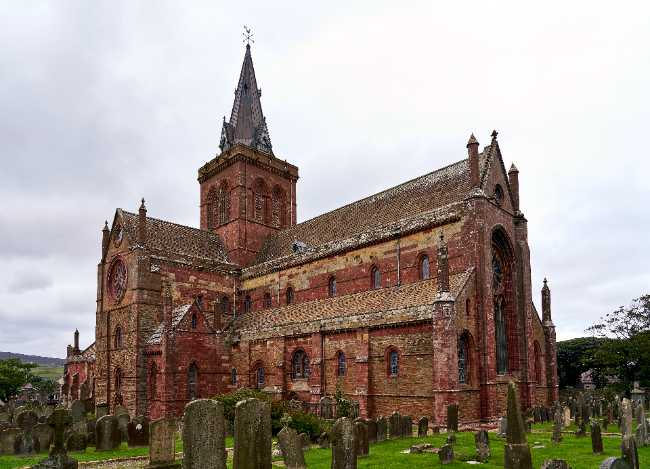
St Magnus Cathedral is a stunning red and yellow sandstone landmark towering over the heart of Kirkwall, known affectionately as the Light in the North. Founded in 1137 by the Viking Earl Rognvald in honor of his martyred uncle Magnus, it is the northernmost cathedral in Great Britain and a magnificent example of Romanesque architecture with later Gothic additions. Uniquely, the cathedral belongs to the people of Kirkwall rather than the church, having been gifted to the town by King James III of Scotland in 1486. Location: Broad Street, Kirkwall, KW15 1DH, Orkney Islands, Scotland, United Kingdom. It sits centrally in the town of Kirkwall on Mainland Orkney. Because of its central setting in Kirkwall, visiting the cathedral puts you right across the street from some of Orkney's finest historical sites and cultural highlights. Directly opposite sits The Orkney Museum, housed in the historic 16th-century Tankerness House and packed with artifacts spanning prehistoric times to Viking history. Right next to the cathedral grounds lie the striking stone ruins of the Bishop's Palace and the renaissance Earl's Palace, two of the finest architectural ruins in northern Scotland. A short walk leads to the harbor, the Orkney Wireless Museum, and the famous Highland Park Distillery.
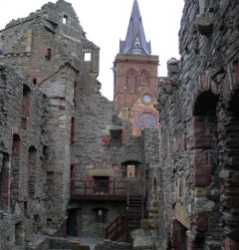 Palace
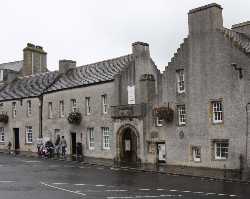 Museum
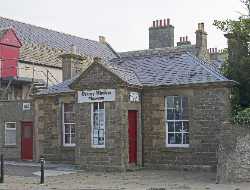 Museum