Dunkeld Cathedral
Founded on a site associated with St Columba’s monks, the cathedral became an important spiritual centre during the medieval period and remains a landmark at the heart of the charming town of Dunkeld. What makes Dunkeld Cathedral especially fascinating is its unusual combination of ruin and active place of worship. Part of the medieval cathedral survives as a roofless ruin, while the restored eastern section continues to serve as a parish church. This striking contrast allows visitors to experience both the grandeur of the past and the living heritage of the present. Inside, the cathedral contains several remarkable features. Look for the beautifully crafted stonework of the choir, medieval architectural details, and a collection of historic memorials dedicated to notable local families. The stained-glass windows add colour and light to the interior, while carved monuments provide insight into centuries of regional history. One of the cathedral’s most famous treasures is the tomb of Alexander Stewart, the “Wolf of Badenoch.” This powerful and controversial nobleman became infamous for his turbulent life in medieval Scotland, and his impressive monument remains a highlight for visitors.
Dunkeld Scotland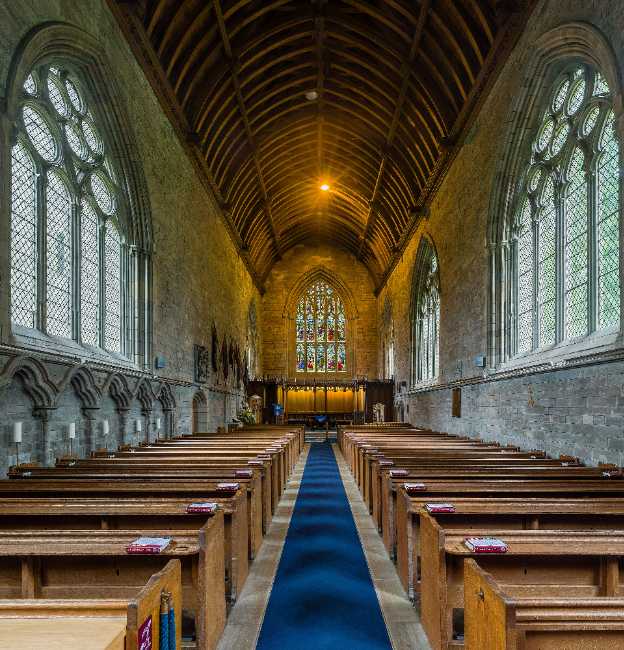
Dunkeld Cathedral stands in the quiet village of Dunkeld in Perth and Kinross, right on the banks of the River Tay. You’ll find it at the end of Cathedral Street, Dunkeld, PH8 0AW, just a short walk from the little town centre and the old stone bridge that links over to Birnam.The cathedral itself sits in peaceful grounds with tall trees and the river flowing past. Part of it is still used as the parish church, and the chapter house holds a small museum with local relics and stories from the site’s long past.A short stroll takes you through the restored eighteenth-century houses along Cathedral Street, looked after by the National Trust. Cross the bridge into Birnam and you can visit the Beatrix Potter Exhibition and Garden, a gentle nod to the author’s childhood summers spent around here. The famous Birnam Oak still stands nearby on the riverside path, a living link to Shakespeare’s Macbeth.A mile or so west lies The Hermitage, a beautiful woodland walk managed by the National Trust that leads to Ossian’s Hall and the rushing Black Linn Falls. A little further out you can reach Loch of the Lowes, a wildlife reserve known for its ospreys and peaceful lochside views. Everything sits close enough that you can explore at an easy pace, with the river and woods never far away.