Moulton Windmill
Built in 1822, this impressive five-storey tower mill stands over 100 feet high to the tip of its sails, making it a remarkable landmark visible for miles across the surrounding countryside. The windmill played a crucial role in local farming communities, grinding grain into flour for generations. After years of decline during the twentieth century, a major restoration project returned the mill to working condition, preserving an important piece of Lincolnshire history for future visitors. Today, it remains a fascinating blend of engineering, craftsmanship, and community pride. Inside, visitors can explore several floors connected by traditional staircases, each revealing a different stage of the milling process. The mill retains an impressive collection of original machinery, including giant wooden gears, drive shafts, grain handling equipment, and millstones. Watching how these components work together provides a fascinating insight into the ingenuity of nineteenth-century millwrights, who harnessed the power of the wind long before modern technology existed. One of the highlights of a visit is climbing to the upper levels, where windows offer panoramic views across the fenland landscape.
Moulton United Kingdom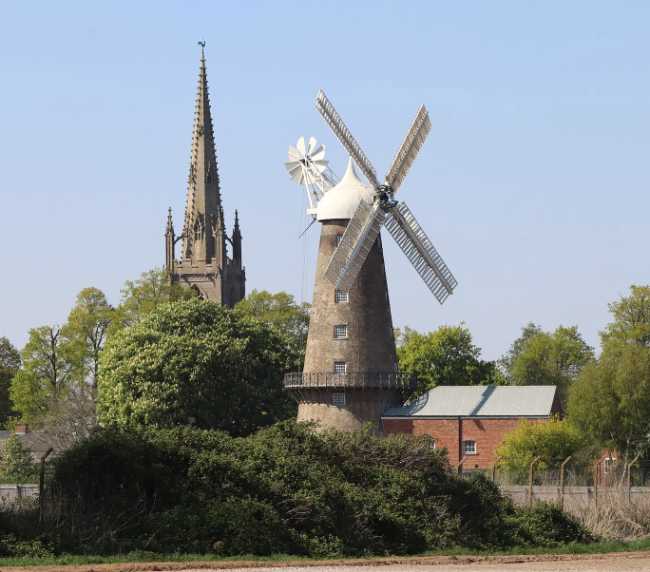
Moulton Windmill stands in the quiet Lincolnshire village of Moulton, roughly halfway between Spalding and Holbeach. You’ll find it on High Street, Moulton, PE12 6QB, rising high above the flat fenland landscape.This is Britain’s tallest windmill, a Grade I listed tower reaching around a hundred feet. Built in 1822, it has been carefully restored by volunteers and still offers guided tours up through its many floors. On a clear day the views from the top stretch for miles across the surrounding countryside, and there’s a friendly tea room and shop at the base.Right in the village you’ll also find All Saints Church, often called the Queen of the Fens, with its tall spire and long history. A short drive into Spalding brings you to Ayscoughfee Hall Museum and Gardens, a medieval house set in peaceful grounds with displays of local life. Nearby Pinchbeck Engine Museum shows the old drainage engines that helped shape the fens, while the Chain Bridge Forge offers a glimpse of traditional blacksmithing. Further out but still an easy trip is Crowland Abbey, with its striking ruined arches and historic church.