St Monans Windmill
This unique connection to salt production sets St Monans Windmill apart from many of Britain’s traditional milling landmarks. The windmill stands overlooking the Firth of Forth and is closely associated with the extensive salt-making works that once made St Monans a thriving industrial centre. Its prominent coastal location ensured access to strong sea winds, providing the power needed to support the demanding process of producing salt from seawater. Today, the restored windmill is one of the village’s most recognisable landmarks and a striking reminder of Scotland’s industrial heritage. Inside, visitors can explore the compact interior and learn about the engineering that allowed the windmill to harness natural energy. Exhibits explain how the machinery operated and how wind power was adapted for purposes beyond traditional flour milling. The restored structure provides an insight into the lives of the workers who depended on the windmill and salt pans for their livelihood. One of the highlights of a visit is discovering the relationship between the windmill and the surrounding historic landscape. Interpretive displays reveal how seawater was processed and transformed into valuable salt, an industry that supplied homes and businesses across Scotland for centuries.
St Monans Scotland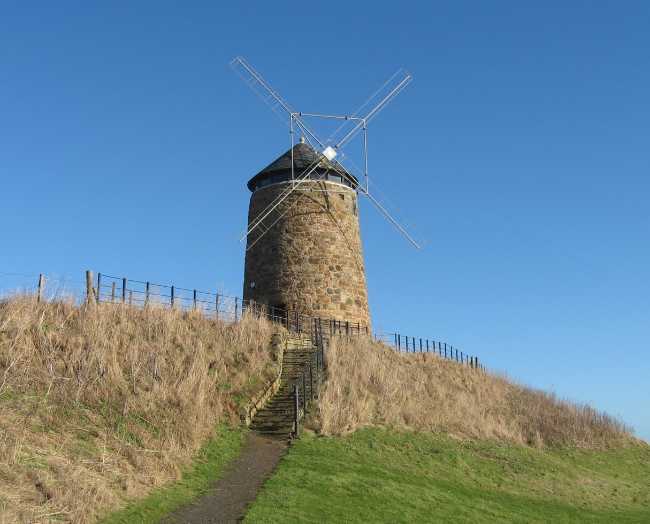
St Monans Windmill stands on the Fife coast between the villages of St Monans and Pittenweem. You’ll find it at Coal Farm, St Monans, KY10 2DQ, a short and pleasant walk along the Fife Coastal Path from either village, with open views across the Firth of Forth.This late eighteenth-century tower is the last remaining windmill in Fife. It once pumped seawater into the nearby salt pans, where coal fires evaporated the water to produce salt, an important local industry for many years. The mill and the remains of the pans form a scheduled monument, and information boards explain how the process worked. The exterior can be viewed at any time, and the elevated position gives fine outlooks over the sea and coastline.A short stroll west brings you into St Monans itself, with its pretty harbour, traditional cottages and the striking Auld Kirk perched right by the water. Nearby stand the cliff-top ruins of Newark Castle. A little further along the coast is Pittenweem, another characterful East Neuk harbour village, while Kellie Castle, a National Trust for Scotland property with gardens and a fine interior, lies a short drive inland. In Anstruther the Scottish Fisheries Museum tells the story of the local fishing industry that shaped these coastal communities.