Reußenstein Castle Ruins
Dramatically perched on a rocky cliff above the Neidlingen Valley, Reußenstein Castle is one of the most striking and photogenic castle ruins in the Swabian Alb. Built around 1270 by the Dukes of Teck, the fortress was strategically positioned to control an important mountain pass leading onto the Alb plateau. Today, its spectacular setting and romantic ruins make it one of the region’s most popular historic landmarks. The castle’s history is closely linked to the noble Reuß family, from whom it took its name during the 14th century. Over the centuries, ownership changed many times before the Counts of Helfenstein acquired the fortress in 1441. After the Helfenstein line died out in the mid-16th century, the castle was abandoned and gradually fell into ruin. Although only ruins remain, visitors can still discover an impressive fortress layout. The complex originally consisted of an upper castle, a semicircular outer bailey, and a lower castle added in the 15th century for extra protection against firearms. Surviving walls, moats, foundations, and defensive structures reveal the scale and sophistication of the medieval stronghold. The remains of the mighty keep, residential buildings, and a small chapel can still be identified throughout the site.
Wiesensteig Germany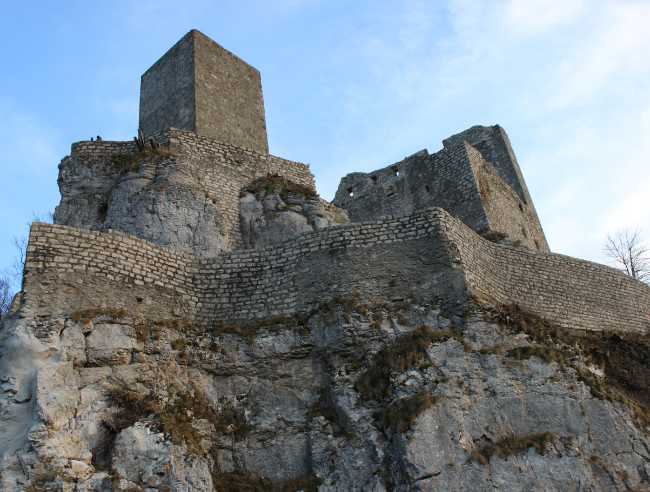
Reußenstein Castle Ruins stand on a steep rocky outcrop high above the Neidlinger Valley in Baden-Württemberg, near the village of Neidlingen and the town of Wiesensteig at Reußenstein, 73349 Wiesensteig. This medieval ruin sits right on the edge of the Swabian Alb and gives open views across the valley and the surrounding hills.The remains of the keep and walls are freely accessible, and the short walk from the nearby parking area makes it an easy stop. Just below the cliffs you will find the Neidlinger waterfall, a pleasant place to pause, and trails lead on through the forest to caves and further viewpoints along the Albtrauf. The nearby Hofgut Reußenstein offers a simple place to rest in season, and the wider Swabian Alb landscape invites quiet walks. It feels like an open, natural spot where the old stone walls, the cliffs, and the valley views come together without any hurry.