Neuschwanstein Castle
Rising dramatically above the forests and lakes of southwest Bavaria, Neuschwanstein Castle is one of the most recognizable castles in the world. Built for King Ludwig II of Bavaria in the 19th century, it was conceived not as a fortress but as a romantic fantasy retreat inspired by medieval legends, knights, and the operas of composer Richard Wagner. Its fairy-tale appearance later inspired several iconic castle designs in popular culture. Although the castle looks medieval from the outside, it was equipped with surprisingly modern technology for its time. Running water, central heating, flushing toilets, and an advanced bell system were incorporated into the design, demonstrating Ludwig II’s fascination with innovation. Visitors touring the interior encounter a series of lavishly decorated rooms. The Throne Hall is among the most spectacular, featuring soaring columns, colorful mosaics, and a magnificent Byzantine-inspired design, despite never receiving the throne it was intended to house. Equally impressive is the Singers’ Hall, one of the castle’s largest rooms, decorated with scenes from German legends and Wagnerian stories.
Schwangau Germany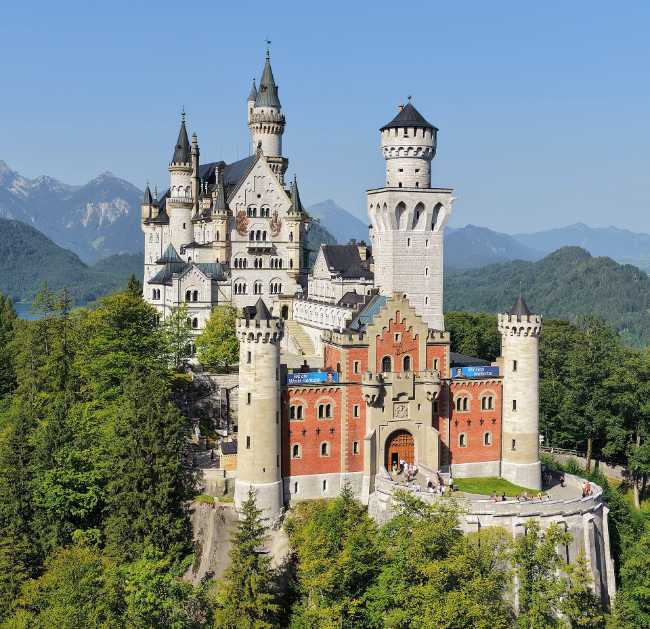
Neuschwanstein Castle is one of the most famous fairy-tale fortresses in the world, dramatically perched on a rugged cliffside in the Bavarian Alps.Location: Neuschwansteinstraße 20, 87645 Schwangau, Bavaria, Germany. It is situated just above the village of Hohenschwangau near the town of Füssen. Because of its position in the breathtaking Allgäu region, visiting Neuschwanstein puts you right next to a cluster of historic castles, scenic lakes, and cultural museums. Directly across the valley stands Hohenschwangau Castle, the yellow neo-Gothic summer residence where Ludwig II spent his childhood. Down in the village on the shore of the Alpsee lake, visitors can explore the Museum of the Bavarian Kings, which traces the history of the Wittelsbach dynasty. A short drive into neighboring Füssen brings you to the High Castle of Füssen (Hohes Schloss), a well-preserved late Gothic fortress housing art galleries, and the Museum of Füssen set inside a former Benedictine abbey. Nearby cultural sights also include the UNESCO-listed Wieskirche pilgrimage church, the royal Linderhof Palace, and the relaxing Königliche Kristall-Therme thermal baths.