Hohenschwangau Castle
Nestled beside the crystal-clear Alpsee Lake and overshadowed by the famous Neuschwanstein Castle, Hohenschwangau Castle is one of Bavaria’s most captivating royal residences. Finished in the 1830s on the site of a medieval fortress, it served as the summer home of the Bavarian royal family and was the childhood residence of King Ludwig II, the visionary monarch who later built Neuschwanstein. Unlike the dreamlike fantasy of Neuschwanstein, Hohenschwangau offers a more intimate glimpse into royal life. The castle’s distinctive yellow exterior stands out against the Alpine landscape, while its richly decorated interiors reveal the tastes and interests of King Maximilian II, who transformed the former ruins into a romantic Neo-Gothic palace. Inside, visitors can admire magnificent state rooms adorned with colorful murals depicting medieval legends, heroic knights, and scenes from German folklore. The Hall of Heroes and Knights is among the most impressive spaces, featuring elaborate paintings and a grand atmosphere. The Oriental Room, royal apartments, and the elegantly furnished bedrooms showcase exquisite craftsmanship, period furniture, and decorative details that reflect 19th-century royal luxury.
Schwangau-Hohenschwangau Germany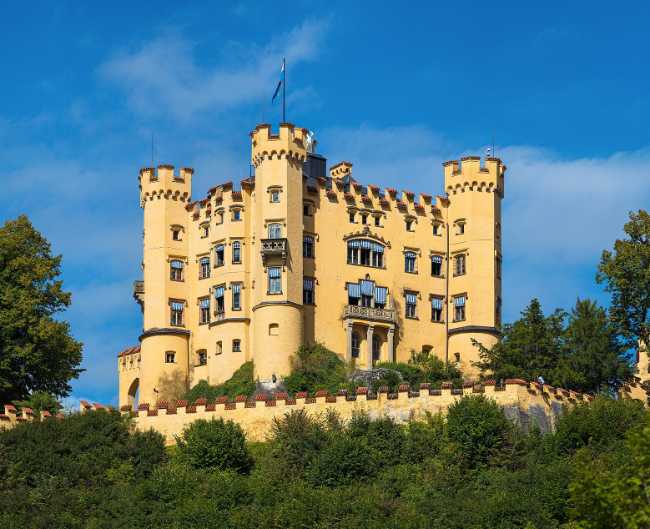
Hohenschwangau Castle is an enchanting nineteenth-century palace set dramatically amidst the Bavarian Alps. Rebuilt in the romantic Neo-Gothic style by Crown Prince Maximilian of Bavaria (later King Maximilian II), this fortress served as the official summer residence for the royal family and was the childhood home of King Ludwig II. Location: Alpseestraße 30, 87645 Schwangau, Bavaria, Germany. It stands on a forested hill directly above the village of Hohenschwangau, near the town of Füssen. Because of its spectacular setting in the Allgäu region, visiting Hohenschwangau Castle places you right alongside renowned historic fortresses, cultural museums, and Alpine lakes. Directly across the valley rises the iconic white turrets of Neuschwanstein Castle, the fairytale fortress built by King Ludwig II. Down in the valley along the pristine shores of the Alpsee lake, visitors can explore the Museum of the Bavarian Kings, which details the lineage and legacy of the Wittelsbach dynasty. A short drive into neighboring Füssen leads to the High Castle of Füssen (Hohes Schloss) housing regional art collections, the former Benedictine monastery complex of St. Mang, and the peaceful waters of the Forggensee lake.