Würzburg Residence
The Würzburg Residence is one of Europe’s finest Baroque palaces and a masterpiece of 18th-century architecture. Built between 1720 and 1744 as the seat of the Prince-Bishops of Würzburg, it combines French, Austrian, and Italian influences into a single harmonious design. Recognized as a UNESCO World Heritage Site, the palace is widely regarded as one of Germany’s greatest cultural treasures. The palace’s most famous attraction is the monumental Grand Staircase. Above it stretches an enormous ceiling fresco painted by the Venetian artist Giovanni Battista Tiepolo. Covering hundreds of square metres, it is considered one of the largest and most impressive frescoes ever created and depicts the four known continents of the world. The staircase itself was a remarkable engineering achievement, featuring a vast unsupported vaulted ceiling. Visitors are then led into the elegant White Hall, decorated with exquisite Rococo stucco work, and the magnificent Imperial Hall, one of the most beautiful ceremonial rooms in Europe. Its soaring frescoes, marble-like surfaces, and golden ornamentation create an atmosphere of extraordinary splendour.
Würzburg Germany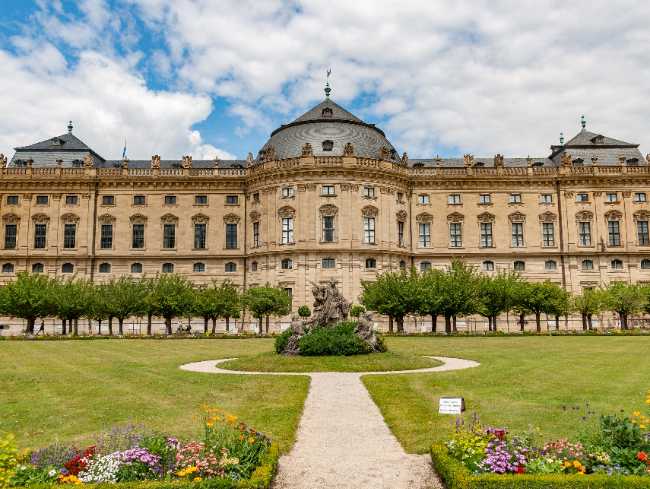
The Würzburg Residence, or Residenz Würzburg, is a magnificent UNESCO World Heritage palace acclaimed as one of the finest achievements of European Baroque architecture. Designed primarily by master architect Balthasar Neumann and completed in the eighteenth century as the seat of the Würzburg Prince-Bishops, the palace is renowned for its sheer scale and artistic grandeur. Location: Residenzplatz 2, 97070 Würzburg, Bavaria, Germany. It is positioned on the eastern side of Würzburg's old town center. Because of its central setting in historic Würzburg, visiting the Residence puts you right next to iconic regional fortresses, medieval churches, and rich art collections. Housed directly within the palace wings are the Martin von Wagner Museum, displaying ancient antiquities and fine arts, and the State Gallery with its classic Venetian paintings. A stroll through the old town leads to the impressive Würzburg Cathedral (St. Kilian), the ornate Rococo facade of the Falkenhaus, and the historic Old Main Bridge (Alte Mainbrücke), lined with statues of saints. Looking across the river, you can spot the imposing Marienberg Fortress perched atop the hills, while a short drive north leads to the grand Rococo gardens of Veitshöchheim Palace.
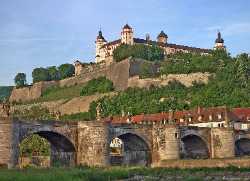 Fortress