Military Intelligence Museum
The Military Intelligence Museum at JFC Chicksands offers a rare and compelling look into the hidden world of British military intelligence. Set within the historic Chicksands estate near Shefford, the museum traces the evolution of intelligence‑gathering from the early days of codebreaking and reconnaissance to the sophisticated techniques used in modern operations. Its displays explore the work of the Intelligence Corps, the development of surveillance technology, and the crucial role of analysis in shaping military decision‑making. Personal stories, original equipment, and reconstructed settings bring to life the often‑unseen efforts of those who served in secrecy. The museum’s location, long associated with signals intelligence, adds an authentic layer to the experience, making it a fascinating destination for anyone interested in espionage, military history, or the strategic craft of information.
Shefford United Kingdom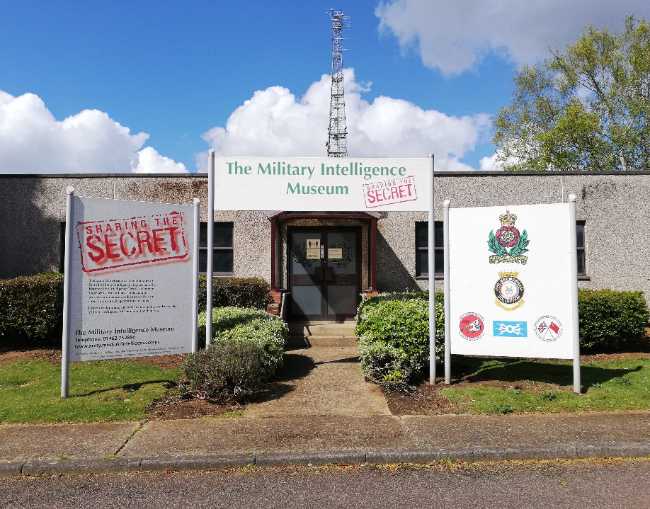
Military Intelligence Museum is located at JFC, Chicksands, Shefford SG17 5PR, on the active Ministry of Defence site at MOD Chicksands, Campton and Chicksands, Bedfordshire. Housed in Building 200 within the former RAF/USAF base, the museum tells the story of British military intelligence from the Boer War to the present day. Its galleries cover the Intelligence Corps, SOE operations, the BRIXMIS Cold War mission, aerial photography from Medmenham, and signals intelligence work carried out at Chicksands. Exhibits include artefacts, honours and awards, interactive displays, and the ‘Name of the Rose’ memorial. Visits are by appointment with guided tours led by ex-Intelligence Corps staff, as the site remains operational under Defence Intelligence. The museum sits within MOD Chicksands, a historic 430-acre estate named after Chicksands Priory, a 12th-century Gilbertine monastery whose Grade I listed remains lie at the heart of the camp. The priory’s medieval cloisters, chapel, and grounds are still visible and give the base its unique character. Chicksands itself has a deep signals history: from 1939 it was an RAF ‘Y Station’ intercepting German communications for Bletchley Park, and from 1950–1996 it hosted a major US Air Force communications and intelligence operation.