Mow Cop Castle
Mow Cop Castle is one of Staffordshire’s most striking landmarks, a dramatic folly perched on a rocky ridge overlooking the Cheshire Plain. Although it resembles a medieval ruin, the structure was built in 1754 by Randle Wilbraham as a picturesque eye‑catcher for his estate. Its broken‑tower design, jagged silhouette, and windswept setting made it an early example of the Romantic taste for artificial ruins—places meant to inspire imagination rather than serve defence. The hill itself has a much older story. Mow Cop was once a quarrying site, and its exposed gritstone formations give the castle an almost natural connection to the landscape. In 1807, it became the birthplace of the Primitive Methodist movement, marked today by a memorial stone near the summit. This spiritual gathering helped shape nonconformist religious life across Britain. Visitors can explore the exterior of the folly, climb the rocky paths, and enjoy panoramic views stretching across Staffordshire, Cheshire, and even to the Welsh hills on a clear day. The combination of rugged geology and romantic architecture makes Mow Cop Castle a memorable stop for walkers, photographers, and anyone drawn to atmospheric historic sites.
Mow Cop United Kingdom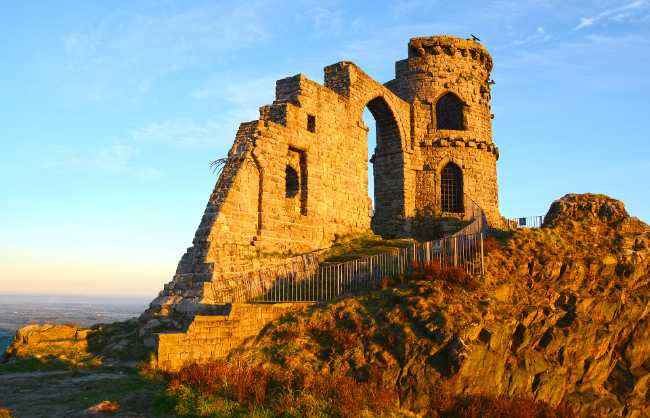
Mow Cop Castle is a dramatic stone folly perched on a hilltop ridge on the border of Cheshire and Staffordshire, England, near the village of Mow Cop. Built in 1754 as a summerhouse for Randle Wilbraham of Rode Hall, it was designed to look like a ruined medieval castle. Though it’s not a real fortress, its rugged tower has become an iconic landmark. The castle sits on Mow Cop Hill, about 335 meters high, offering sweeping 360-degree views across the Cheshire Plain, the Peak District, and on clear days even into Wales. The site is managed by the National Trust and is free to visit. The area around Mow Cop is rich in industrial and natural heritage. Right below the hill is the village of Mow Cop, known as the birthplace of Primitive Methodism after a historic 1807 camp meeting on the hillside. A few miles away is Little Moreton Hall, a stunning 16th-century timber-framed Tudor manor with a moat and knot gardens. The historic market town of Congleton is close by, with its ancient bear legend and independent shops. For nature lovers, Biddulph Grange Garden is nearby — a Victorian garden with Chinese and Egyptian themed areas. The Staffordshire and Cheshire canal networks are also within easy reach for waterside walks, and the Gritstone Trail offers longer hikes along the ridge with more panoramic views.