Brough Castle
Brough Castle in Cumbria is a striking medieval fortress whose dramatic history is written into its weathered stone walls. Built on the site of a former Roman fort, it once guarded the strategic Stainmore Pass, making it a key stronghold on the route between England’s east and west. An interesting fact is that the castle was restored in the 17th century by Lady Anne Clifford, one of England’s most remarkable noblewomen, who rebuilt several northern castles after inheriting her family estates. Inside the ruins, visitors can explore the remains of the great keep, the hall range, and the defensive towers that once formed a powerful Norman fortress. The courtyard offers sweeping views of the surrounding Eden Valley, while information panels help reconstruct how the castle looked during its peak. Traces of fireplaces, stairways, and window arches reveal the blend of domestic life and military function. Though roofless today, Brough Castle retains a strong sense of atmosphere, making it a rewarding stop for anyone interested in medieval history and rugged northern landscapes.
Church Brough United Kingdom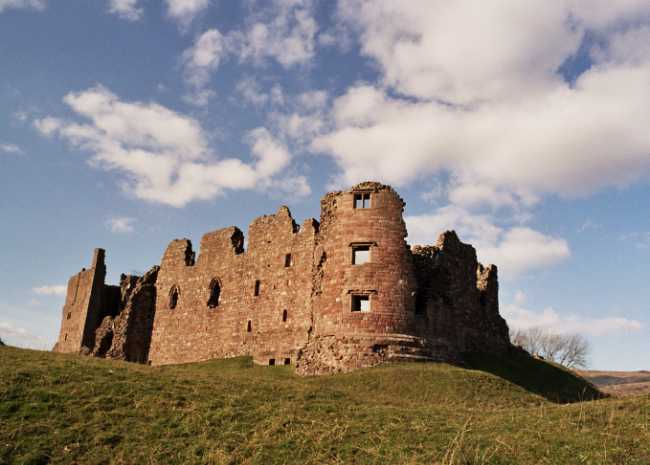
Brough Castle stands in Church Brough, on the eastern edge of Cumbria in the Eden Valley, just south of the A66 road. The ruins occupy a commanding site above the village, originally built in the late 11th century on the remains of the Roman fort Verterae, which once guarded the route between Carlisle and York. The castle was repeatedly destroyed and rebuilt, passing to the Clifford family in the 13th century and later restored by Lady Anne Clifford in the 1600s before a final fire left it in ruins. Today it is managed by English Heritage and open to the public free of charge, with views across the lush pastures of the valley. The castle is part of a twin village. Church Brough grew around the castle and St Michael’s Church, a sandstone church dating from 1150 with later 14th- and 16th-century additions. Just across the A66 is Market Brough, known for its wide medieval main street and former coaching inns that once served the England-Scotland route. Visitors can explore both parts on foot, with a market cross and maypole still marking the old village squares. Nearby attractions include the archaeological remains of Verterae, visible near the castle, and the Fox Tower folly on Helbeck fell, an 18th-century tower built by an industrial entrepreneur. The scenic B6276 road leads from Market Brough toward High Force Waterfall in County Durham, reputed to be England’s highest unbroken fall, and on to Cow Green Reservoir and its nature reserve. For refreshments, the Brough Castle Ice Cream Parlour and Tearoom sits close to the ruins, while the Outfitters Cafe Bar and Chofh’s Tea Room offer food in the village.